Toyota iQ3, 2010


Toyota iQ range is extended for the first time since launch with the introduction to the line-up of a 1.33-litre engine. The highly efficient lightweight unit, already successfully deployed in Auris, Yaris and Urban Cruiser is offered exclusively in the new Toyota iQ3 model.
Benefiting from Toyota Optimal Drive technology for a class-leading combination of power, fuel economy and low emissions, it uses Dual VVT-i control of both intake and exhaust valves to deliver strong torque at low to medium engine speeds and achieve maximum efficiency.
The headline figures broadcast the exceptional customer benefits in terms of running costs. With manual transmission, Toyota iQ3 returns an official 58.9mpg in combined cycle driving, and 113g/km of CO2 - Band B for road tax (�35 annual charge) - both of which are best-in-class figures. Equipped with Toyota's new Multidrive CVT system, fuel economy is just as good, while emissions rise slightly to 120g/km, but remain within Band B.
This achievement is not at the expense of performance. The engine develops a maximum 98bhp at 6,000rpm and peak torque of 125Nm at 4,400rpm. Nought to 62mph can be achieved in 11.8 seconds (11.6 with Multidrive) and top speed is 106mph. This underlines the fact that Toyota iQ is more than just a city runabout, giving a strong, stable and enjoyable drive at motorway speeds.
Matched to a compact, lightweight six-speed manual gearbox, the engine features Toyota's Stop & Start system. This automatically cuts the engine when the car comes to a stop and the gear shift is moved to neutral; when a gear is selected, the engine restarts quickly (in just 0.4 seconds) and seamlessly, thanks to the use of a permanently engaged gear mechanism. In urban driving - Toyota iQ's natural environment - Stop & Start can yield fuel consumption savings of up to 15 per cent.
Toyota iQ3 is also available with Multidrive, Toyota's new stepless CVT (continuously variable transmission).
One of the key elements of the 1.33-litre engine is its piston design. Smaller and lighter than on the previous 1.3 unit, they are designed with a smaller contact area and use carbon ceramide, an advanced material more commonly used in Formula One engineering, to reduce friction.
Toyota iQ3 carries forward the premium specification of iQ2 but with some additional, exclusive features: the door mirrors have chrome-finished housings and the car rides on larger, 16-inch dual five-spoke alloy wheels. The choice of six paint finishes includes Decuma Grey metallic, which is also exclusive to Toyota iQ3.
The standard equipment features include automatic headlights and wipers, climate control, electric folding and heated door mirrors, Smart Entry and Start, auto-dimming rear view mirror, six-speaker sound system, front fog lights and a leather trimmed steering wheel. Nine airbags are fitted, including the world's first rear window airbag, and the active safety package includes Vehicle Stability Control (VSC) with Traction Control (TRC).
Toyota iQ Accessory Packs and Options
Four themed accessory packs have been assembled for iQ, giving owners an easy way to give their car that something extra.
* iStyle (�295) adds chrome surrounds to the front fog lights, chrome side sills, a chrome strip on the tailgate and aluminium scuff plates.
* iUrban (�345) provides rear parking sensors, a reversible rubber/velour boot liner (for use when the rear seats are folded flat) and carpet mats.
* iSports (�495) focuses on style with a neat roof spoiler, deep rear skirt and inverted delta-shape chrome exhaust tailpipe finisher.
* iConnect (�375) keeps you in touch on the move with Bluetooth, plus the neat detachable Glovebag to store documents and small personal items.


 The Crown has evolved into a line of full-size luxury sedans by Toyota. The range was primarily available in Japan and some other Asian countries, originally designed to serve as a taxi. It was in later years sold in the United States during the late 1950s and up until 1971. The Crown is Toyota's oldest sedan still in production. It is outranked only by the Century and the Majesta in social status. The Crown is used by many Japanese companies as the company Limousine. Exports to Europe began in 1964 with the first cars going to Finland. Other European countries which saw imports of the Crown included the Netherlands and Belgium. The United Kingdom was another market until the early 1980s. It was also exported to Canada for a few years—1965–68. In many markets the Crown had become very expensive and was replaced by the Cressida when that model became available for export in the early 1980s.
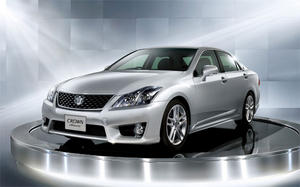 Elegant 2011 Toyota Crown
 Luxury 2011 Toyota Crown
 Inside Of 2011 Toyota Crown
 The new Crown is available in 5 different trim levels: the basic Crown Sedan; the Crown Royal series which is a more comfortable and luxurious car; the Crown Athlete series which takes the luxurious aspect of the Royal series but has more aggressive styling and sporty features; the Crown Majesta series which is larger and has more luxurious features than the Royal series; and the Crown Hybrid series which is a trim level designated for the hybrid V6 drivetrain. The Crown is one of the first vehicles to have a 3 Dimensional Satellite Navigation System coupled with G-BOOK and boasts many features that have not been developed by other luxury car makers.
 2011 Toyota Crown Rare Seats
 2011 Toyota Crown Modification
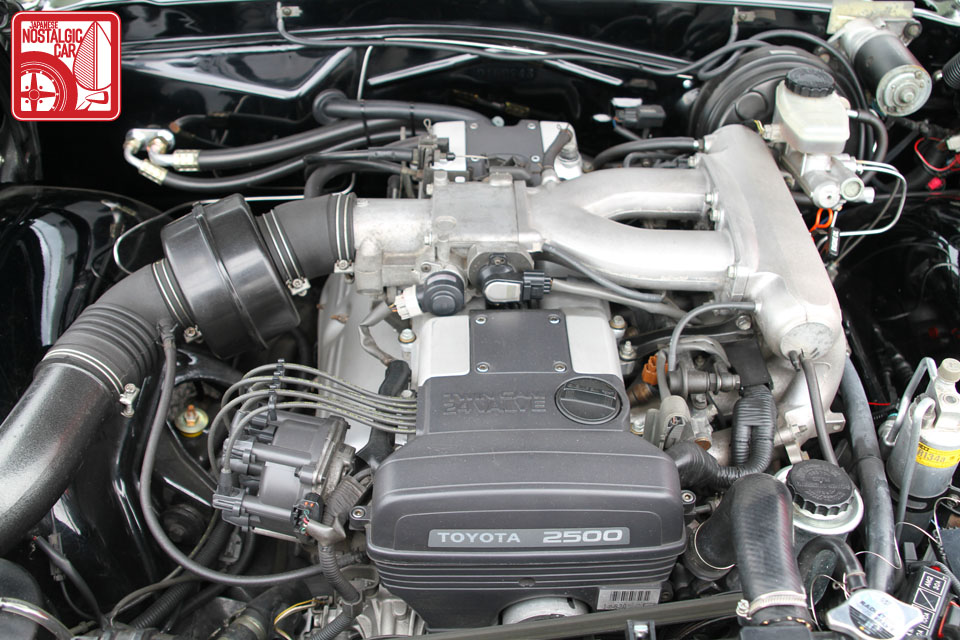 2011 Toyota Crown Machine
 The Crown hybrid concept was exhibited at 2007 Tokyo Motor Show. In television commercials in Japan a song was written by composer John Harle titled "How should I my true love know?" The Crown is also manufactured by the Tianjin FAW Toyota Motor Co. Ltd. in Tianjin, China. Three petrol engines are available: the 2.5 L 4GR, the 3.0 L 3GR and the 4.3 L 3UZ. This is the first generation which does not offer a station wagon version. It is not known whether such a version will be available.


