Get Paid To Promote, Get Paid To Popup, Get Paid Display Banner -->
Showing posts with label Mazda. Show all posts

Sunday, April 17, 2011

Mazda CX-7

The CX-7 is a mid-size crossover SUV model from Mazda, the production version of the MX-Crossport concept car. The CX-7 is built in Hiroshima, Japan, starting in early 2006. The CX-7 was shown publicly for the first time at the 2006 Los Angeles Auto Show in January. Production officially began on February 20 at Mazda's Ujina#2 factory in Hiroshima. The CX-7 went on sale in spring 2006 as a 2007 model. It is also Mazda's first mid-size SUV since the Navajo was discontinued in 1994. The CX-7 receives an all-new platform instead of sharing the Ford/Mazda CD3 platform used by the larger Mazda CX-9/Ford Edge/Lincoln MKX crossovers as well as the Mazda6. It uses the front suspension of the Mazda MPV minivan, with the rear suspension from the Mazda5. Many of the all wheel drive components come from the Mazdaspeed6. It shares its turbocharged engine with the Mazdaspeed6. It uses a 6-speed automatic transmission. The CX-7 currently slots between the Tribute and the CX-9. Power comes from the same 2.3 L straight-4 MZR engine used in the Mazdaspeed3 and Mazdaspeed6 coupled with a 6 speed Aisin automatic transmission, and tuned to produce 244 hp or 182 kW (Australian model 175 kW) at 5000 RPM and 258 ft·lbf (350 N·m) of torque at a low 2500 rpm, 99% of the maximum torque is available to 5000 rpm. The MZR 2.3L DISI turbo engine found in the Mazdaspeed3 and Mazdaspeed6 has been retuned in the North American-Spec CX-7 to deliver torque at a lower RPM for less turbo lag off the line. This was achieved thanks to a redesigned, smaller KO4 turbocharger. UK-Spec CX-7's feature the same, larger KO4 turbocharger and transmission found in the Mazdaspeed line.

The CX-7 features fully independent suspension, four-wheel ventilated disc brakes with standard anti-lock brakes, stability control and traction control, and a choice of either front wheel drive or Mazda's Active Torque-Split all wheel drive system. With the Active Torque-Split system, two computer-controlled magnetic clutches feed up to 50% of the engine's torque to the rear wheels. The Australian combined cycle official fuel economy is 11.5 L/100 km (24.6 mpg-imp; 20.5 mpg-US). Fuel Economy varies among different tests, owners, and models, but drivers report a typical range between 10.0 L/100 km (28.2 mpg-imp; 23.5 mpg-US) and 18.0 L/100 km (15.7 mpg-imp; 13.1 mpg-US).
As of the 2010 model, there are four trim levels (model):
* iSV is the base version, priced from US$21,550
* iSport is the next version, priced from $24,385
* sTouring is the upscale version, priced from US$26,135
* sGrand Touring is the top version, priced from US$26,935
* Only Touring and Grand Touring models are available with All-Wheel Drive and only these two trims are offered with the 2.3L turbocharged engines while the SV and Sport trims come with a 2.5L MZR naturally-aspirated DOHC four-cylinder.
Canadian models and pricing:
* GS Front-Wheel Drive - $32,095 CDN
* GS All-Wheel Drive - $34,095 CDN
* GT Front-Wheel Drive - $35,295 CDN
* GT All-Wheel Drive - $37,295 CDN
Australian models (AWD only) pricing:
* "CX-7 Classic" Base trim starts at AUD $40,610
* "CX-7 Luxury" Top trim starts at AUD $46,460

This is an update to the original. The exterior design features revised front and rear fascias with the front adopting the larger five-point grille design similar in appearance to the recently redesigned RX-8, MX-5 and Mazda3/Axela. The new interior features redesigned gauges with blackout meters that feature three-dimensional dials, a 3.5 inch super-twisted nematic (STN) monochrome and 4.1-inch thin-film transistor (TFT) colour Multi Information Display (MID), (positioned at the top of the instrument panel), Bluetooth compatibility, and a Blind Spot Monitoring System. The car was unveiled at the 2009 Canadian International Auto Show. The diesel version now includes a manual transmission, and has been on sale in Europe since 2009. Engine choices include 2.5 litre MZR 4-cylinder engine that produces 161 hp (120 kW) and 161 lb·ft (218 N·m) of torque and the same MZR 2.3L DISI Turbo engine from before. Transmission is a 5-speed automatic for the 2.5 and a 6-speed automatic for the 2.3 DISI Turbo engine.The CX-7 reused the name RX-7, (which was a sports car that was discontinued and replaced by RX-8), but the first letter, 'R' ('R' means rotary engine), was changed to 'C' ('C' means crossover SUV).

Friday, March 25, 2011

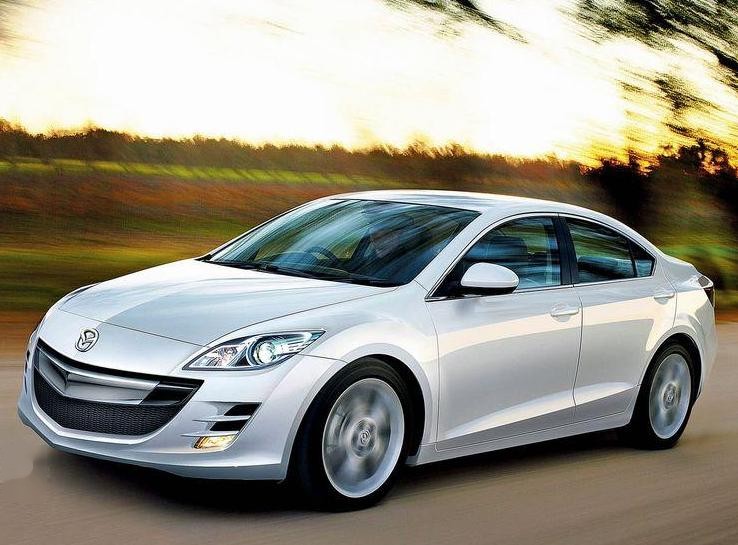
Mazda 3

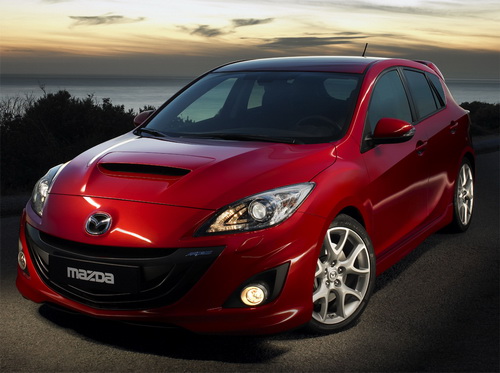
Elegant Red Mazda 3

Mazda 3 On The Road

Exotic Blue Mazda 3 With Beautiful Lighting

Mazda 3 Engine Detail

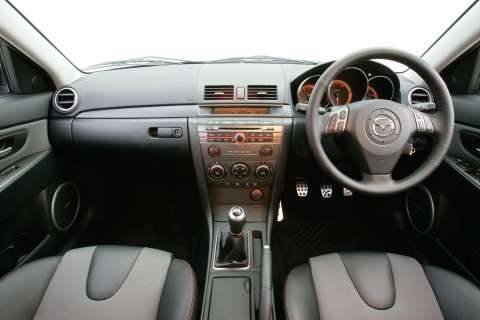
Mazda 3 Interior With LCD View

Inside of Mazda 3 With Luxury Interior View

Elegant Mazda 3 Rare Seat

Mazda 3 Hatchback

Tuesday, March 8, 2011

Monday, March 7, 2011

Mazda RX-8, 2009

Mazda RX-8, 2009


Launched in 2003, the Mazda RX-8 hit the global market with a serious bang. The RX-8 has won more than 50 global awards since its release including 2003 RJC Car of the Year in Japan Australia's Wheels magazine's Car of the Year for 2003, 2003 International Engine of the Year, 2004 Singapore Car of the Year, the 2004 U.S. Best Sports Car and UK Car of the Year 2004. It was also named on Car and Driver magazine's Ten Best list for 2004, 2005, and 2006. All together, Mazda has sold nearly 167,000 RX-8s around the world.

STYLING INNOVATION - REFRESHED DESIGN CUES PROVIDE "HIGHQUALITY" DYNAMISM

Mazda RX-8 was designed with an athletically sculpted exterior that provides a sense of originality that's unrivaled in the marketplace today. The new Mazda RX-8 receives design enhancements that are meant to freshen the styling and give Mazda RX-8 a new look, without impairing the basic design theme. Refinements for the new Mazda RX-8 include restyled front and rear bumpers and front fascia; sporty, high quality finish front and rear headlamps; and larger exhaust pipes (now measuring 90 mm across). The new Mazda RX-8 also offers a new five-spoke wheel design featuring a symbolic and sporty design reminiscent of the rotary engine, with different arrangements for each wheel size.

Taut muscular lines give Mazda RX-8 the liberating look of an athlete in motion. The muscular styling maintains classic sports car proportions while adding a Zoom-Zoom edge that is unmistakably Mazda.

The RX-8's unique "freestyle" four-door design is proof that a true sports car does not need to sacrifice space or convenience for performance. The advanced design of the rear-hinged rear doors provides a large door opening, allowing adult-sized passengers to easily enter and exit the vehicle. This design is also advantageous when securing a baby or a small child in the back seat. With a spacious rear seat area providing ample passenger room for four full-size adults, and enough trunk space for a weekend's worth of luggage, this sports car proves its versatility.

The Mazda RX-8's exterior styling presents a genuine sports car form, while the interior boasts a comfortable and intelligently designed cabin. Minor enhancements were made for the new Mazda RX-8 to provide a simple and functional interior design that supports driving pleasure. The center IP shape was redesigned to give a feeling of dynamic movement, a variable red-zone was added to the tachometer that will rise as the engine comes to operating temperature and a new steering wheel and redesigned front and rear seats are also added.

The rotary design element is incorporated through the interior of the Mazda RX-8 in creative ways, appearing in the seats. The stylish cabin also evokes a sense of luxury and high-end quality. Mazda's design team examined every aspect and component of the interior and has created an elegant, driver-centric atmosphere. Through the use of advanced ergonomic research, Mazda engineers determined that improper seating posture is a major cause of driver fatigue and built in optimum support in the front seats to help offset discomfort. In addition, the color of the Mazda RX-8's instrument cluster was developed to reduce eye fatigue and strain.

PERFORMANCE INNOVATION - MORE SPORTS CAR DRIVING PLEASURE

Through-and-through, the Mazda RX-8 is a pure sports car that gives the driver an exciting and dynamic experience. For the new Mazda RX-8, engineers improved body rigidity through the addition of structural reinforcements, by adding a trapezoidal strut tower bar and enhancing the local rigidity of the front suspension tower areas. Also, the rear suspension geometry has been reconfigured for better handling performance and driveshaft rigidity is improved, lowering NVH levels and improving performance.

In addition, the differential gear ratio on manual transmission-equipped cars is lowered from 4.444 to 4.777 for improved off-the-line performance. While minimal, these performance changes give Mazda RX-8 increased acceleration and performance, as well as even greater responsiveness to the accelerator pedal - always a rotary-engine and Mazda RX-8 hallmark.

To achieve this sophisticated dynamic, Mazda utilizes the advanced RENESIS (Rotary Engine genesis - or rebirth of the rotary engine) engine. The Mazda RX-8 remains the only mass-produced rotary-powered passenger car in the world. While exhibiting unusually high power output for a naturally aspirated engine, RENESIS outstrips comparable reciprocating engines in terms of acceleration, the feeling of power in reserve and quick response.

By turning a triangular rotor in a cocoon-shaped combustion chamber, the Mazda RX-8's rotary engine efficiently performs the four processes of intake, compression, combustion and exhaust. The RENESIS engine is remarkably smooth and high revving � all the way to 9,000 rpm (7,500 rpm on Sport A/T-equipped models) � and offers a smaller engine footprint than traditional internal combustion engines (some 60 percent smaller and lighter than a comparably powered V-6, and 40 percent smaller and lighter than a four-cylinder). In fact, the packaging and styling that define the Mazda RX-8 would not have been possible had Mazda engineers chosen a conventional piston engine.

Improving upon 40 years of rotary designs, the RENESIS engine features side intake and exhaust ports with nearly 30 percent more intake port and twice as much exhaust port than its predecessors. The efficiencies gained through shortening intake/exhaust overlapping period and using the larger intake and exhaust ports in delivering world-class performance.

The Mazda RX-8's normally aspirated 1.3-liter engine might appear diminutive to the untrained eye when compared to large-displacement V-8s or heavyweight V-10s or V-12s. However, through the incredible efficiencies of a rotary powerplant, an advanced three-stage intake system and an electronic throttle, the RENESIS engine delivers smooth, linear power on a grand scale.

The Mazda RX-8 uses an aluminum double-wishbone front suspension, reducing unsprung weight over the use of steel components. By mounting the upper and lower arms on a highly rigid sub-frame, the long arms ensure linear alignment changes throughout the jounce and rebound of the front wheels. All corners are fitted with mono-tube gas-filled shock absorbers designed with large-diameter internal pistons and valving, which offer excellent road feedback and a smooth ride.

Mazda MX-5 Superlight Concept, 2009

Mazda MX-5 Superlight Concept, 2009


The Mazda MX-5 Superlight Concept is an answer to the world of automobiles and individual mobility moving towards energy efficiency, environmental compatibility and uncompromised safety - along with dynamic attributes and driving fun. In its efforts to offer pure driving enjoyment, while meeting its ecological and social responsibilities, Mazda has been focusing on weight reduction as a core base technology. For 20 years, reducing weight has been a tradition with the Mazda MX-5. It provided the inspiration for the radical design of Mazda's latest show car and its radical interpretation of the cult roadster.

Exterior Design
The Mazda MX-5 Superlight Concept was to strengthen these bonds even further. By doing this without a windshield, the retractable top and its frame, designers achieved an important step in this direction. As the Mazda MX-5 Superlight Concept, the allweather production roadster has mutated into a driving machine that lets sports car enthusiasts enjoy the natural surroundings unfiltered and tangible. Not only does the wind blow unimpeded during driving, pilot and co-pilot can also experience the sounds, smells and temperature changes of their immediate surroundings. And finally, the show car's intense bond between the driver and the technology of the vehicle gives it a unique closeness that can only be found in stronger form in the cockpit of a race car.

The Mazda designers created special roll-over bars, not only because they are very sporty-looking, but also to contribute to aerodynamic efficiency. These also make it clear that roll-over protection is important in this concept. And they prevent wind turbulence around the heads of the passengers, from whom the law would require the wearing of helmets while driving.

By removing equipment not vital to driving, and by replacing vital things with components that support the unique concept of the vehicle, designers sharpened the character of the Mazda MX-5 Superlight Concept.

Cause there is no windshield, for instance, there is obviously no need for wipers. The roadster show car's completely open design makes the need for outer door handles, side windows and their openers unnecessary. A single, filigree aluminium, wide-angle mirror gives a good view of the road behind. It's placed inside an extension of the bonnet. Front and rear lights are the same as those of the production model with additional LED lamps at the front, and brake lights at the back of each roll-over bar, which contribute to the roadster's sporty look.

The lack of a windshield required an extension of the original aluminium bonnet into the cabin. The attached sheet here is made of lightweight carbon fibre and provides a hood for the dashboard frame.

This also changed the proportions of the body's design, making the front of the car longer and the passengers seem like they are sitting further back towards the rear-drive axle, all of which is enhanced by the massive roll-over bars and their aerodynamic cladding. The Mazda MX-5 Superlight Concept translates the dramatic proportions of historical race cars into a very modern form.

Interior Design
The purity in design of the exterior also characterizes the interior design, which does not have aesthetics as ultimate goal, but was conceived to contribute to reducing vehicle weight. Driver and passenger of the Mazda MX-5 Superlight Concept are greeted by racing bucket seats made of ultra-lightweight carbon fibre. They are slide adjustable and upholstered with the same saddle coloured leather as the armrests, the steering wheel, and the lightweight aluminium shift lever and hand brake. Colour-coordinated four-point seatbelts hold the driver and passenger firmly in their seats.

The bonnet extension into the passenger cell provides a canopy for the dashboard, which makes the dashboard look smaller than the production Mazda MX-5. Made of lightweight plastic reinforced with fibreglass, it contains the same instruments as the production Mazda MX-5. These are held in place by a dashboard frame made of lightweight carbon fibre. Like a purebred race car, the Mazda MX-5 Superlight Concept has an ignition button in the centre of the dashboard, along with two emergency kill buttons for immediate fuel and electricity cut-off.

Supplying air and climate control to the open passenger compartment is only possible in limited form, so the show car has no air conditioning and no fans. Air-flow is increased when the roadster accelerates, and only small air vents are needed. The interior is made without any trim. Sound insulation mats and rugs do not meet the requirements of a purist roadster like this and are not used at all.

Mazda MX-5, 2009

Mazda MX-5, 2009


The Exterior Design: A Fusion of New Mazda Elements and an Unmistakable MX-5 Look
The front grille has been enlarged and changed from an oval shape to the five-point grille that forms part of the well-known Mazda family face. Combined with tautly styled headlights and lowing fog- lamp bezels, the new grille creates a reined and athletic expression.
The five points of the grille are slightly rounded the new shape of the front bumper, with corners that extend downwards, enhances the dynamic look and improves the aerodynamics.
The rear bumper has a new design that makes the rear look wider, sportier, and more integrated into the body. The rear combination lamps inherit the traditional MX-5 elliptical motif, and protrude further outboard for greater aerodynamic efficiency.

The Roadster Coupe's more Upscale Identity
The Mazda MX-5 Roadster Coupe, which features a groundbreaking powered roof system, also incorporates several design changes that further emphasize its more upscale identity and distinguish it from the soft-top version.
    * Front grille: Whereas the soft-top version has a in-type grille, the Roadster Coupe has a mesh grille that is framed by a chrome ring.
    * Headlamp inner bezels: The headlamp inner bezels are painted silver on the soft-top version, but have a chrome finish on the Roadster Coupe.
    * Fog-lamp inner bezels: The fog lamp inner bezels are black on the soft-top version, but are painted silver on the Roadster Coupe.
    * Outer door handles: The outer door handles are body-coloured on the soft-top version, but have a chrome finish on the Roadster Coupe.
    * High-mounted stop lamp: The high-mounted stop lamp has a red lens on the soft-top version, but a clear lens on the Roadster Coupe.

The New Wheel Designs
The MX-5 is available with 16-inch and 17-inch aluminium wheels. The 16-inch wheels have five sets of twin spokes for a lightweight look. The 17-inch wheels have 10 twisted spokes for a stronger impression of power and dynamism.

The Interior Design: Higher Than Ever Quality and Driver- Friendliness
The interior design delivers the Mazda MX-5's traditional combination of comfortable snugness below shoulder level and openness above shoulder level. It also reflects customer feedback in the form of enhanced quality and driver-friendly features.
The decorative surfaces on the instrument panel have been changed from glossy piano black to dark silver, which has a subtler, higher- quality look befitting a sports car. The meters have new graphics for higher legibility. The climate-control dials on the centre stack have each been given a silver-coloured ring for a higher-quality look. A protrusion has been eliminated from the outer surface of each door pocket to create more leg space. And the door and centre-console armrests have each been given a soft pad for a better feel.
Recaro seats designed exclusively for the MX-5 are available in certain regions. They are upholstered in leather and perforated Alcantara for a sporty look, and they combine excellent support with easy ingress and egress.

Evolved Jinba Ittai for Enhanced Fun-To-Drive
The Jinba Ittai feeling on which Mazda has always focused with the Mazda MX-5 defines the kind of spontaneous car-and-driver interaction that anyone can experience whether they're driving the MX-5 in town, on twisty roads, or on an open highway. With the latest facelift, Mazda engineers evolved the attributes in the "driving", "cornering", "braking", and "listening" categories in the fishbone chart to realize performance that lets drivers enjoy the feeling of oneness with the car to an even greater degree.

A 500 rpm Higher Rev Limit Maximizes Engine Potential for Greater Enjoyment
The powertrain has been enhanced to enable the driver to enjoy the full potential of the engine's performance (a key "fun to drive" aspect of the MX-5). Specifically, the speed at which the engine delivers maximum power has been raised from 6,700 rpm to 7,000 rpm (2.0-litre M/T version) and the rev limit has been raised from 7,000 rpm to 7,500 rpm (all 2.0-litre versions). Without these enhancements, the engine feels smooth and linear right up to the rev limit, even with the throttle wide open. With them, however, the driver can really experience the sensation of extracting every single horsepower out of the engine (the enhancements described here apply to the 2.0-litre grades with a manual transmission). The crucial 500 rpm increase in the rev limit is enabled by greater precision in the engine, namely: a forged crankshaft (this ensures the required rigidity at high engine speeds), fully floating pistons and newly designed valve springs.

A Sportier Engine Sound that Responds More Crisply to Accelerator Inputs
The engine sound (a key element in the "listening" category of the MX-5 fishbone chart) is a big part of the sports car experience. With the latest facelift, Mazda engineers made the Mazda MX-5 engine sound even better without causing aural discomfort for people outside the car. Notably, they increased the rigidity of the plastic surge tank in the intake manifold. The optimized surge tank combines with the new forged crankshaft to realize a clearer engine sound throughout the rev range. In vehicles with the six-speed manual transmission, the engineers also adopted a newly developed device called an Induction Sound Enhancer (ISE). This amplifies the pulses that occur when an accelerator input opens the throttle valve to increase air low into the engine, thereby delivering a more exciting sound to the cockpit. The intake sound created by the ISE feels synchronized with the driver's accelerator inputs, so the driver enjoys a crisp, thrilling engine sound even when using the accelerator pedal gently to adjust the revs for a downshift.

The Newly Evolved and Reined Transmissions
With the six-speed manual transmission, the meshing surfaces of the 1st-4th triple-cone synchronizers are now carbon coated, and the 3rd-4th synchronizer diameter has been increased. These improvements enable smoother shifts up to the engine's heightened rev limit of 7,500 rpm.
A six-speed Activematic automatic transmission that's newly available with the MX-5 for Europe incorporates two new control technologies. One is Direct Activematic (DAM), which allows the driver to quickly change gears using paddles on the steering wheel while still driving in the "D" range. It was developed to enable quick downshifts for three common situations: decelerating using engine braking on a downhill road; accelerating after decelerating into a corner; and overtaking another vehicle. (The driver does not need to select the "M" range before shifting down.) Since Direct Activematic enables engine braking and acceleration more quickly and easily, it makes driving easier and more fun. The other new technology is Active Adaptive Shift (AAS), by means of which the transmission control system evaluates the driving situation from factors such as the road's gradient and twistiness and the accelerator and brake inputs. When the system recognizes enthusiastic driving, it actively promotes upshifts and downshifts to realize a linear and sporty response that matches the driver's intentions.

An Athletic Design that Heightens Aerodynamic Performance
To improve handling stability, quietness, and high-speed fuel economy, the MX-5 development team drew on Mazda's expertise in incorporating aerodynamic improvements into styling that's faithful to a design theme. The main aerodynamic improvements are as follows:
    * air guides that protrude downward from the left and right corners of the front bumper
    * specification vehicles, except some specific markets)
    * protruding rear combination lamps
    * wider front tyre deflectors
The  Quieter Ride in the Roadster Coupe
Given the Roadster Coupe's more upscale positioning, the development team produced a quieter ride by reducing wheel resonance and adding damping and sound-insulating materials, such as urethane filling in the front suspension crossmember and damping material in the front part of the roof. Thanks to these improvements, road noise in the cockpit on a coarse road surface with the roof closed is 2.1dB lower than before. Quietness is further promoted in the Roadster Coupe and soft-top version by stiffer door modules and by newly added reinforcements on the No. 2 crossmember.

Monday, February 28, 2011

2011 Mazda 5 MPV


 2011 Mazda 5 MPV
2011 Mazda5 MPV

 2011 Mazda 5 MPV
2011 Mazda5 MPV
 2011 Mazda 5 MPV
2011 Mazda5 MPV
 2011 Mazda 5 MPV
2011 Mazda5 MPV
 2011 Mazda 5 MPV
2011 Mazda5 MPV
 2011 Mazda 5 MPV
2011 Mazda5 MPV
 2011 Mazda 5 MPV
2011 Mazda5 MPV
 2011 Mazda 5 MPV
2011 Mazda5 MPV

2011 Mazda 5 MPV


 2011 Mazda 5 MPV
2011 Mazda5 MPV

 2011 Mazda 5 MPV
2011 Mazda5 MPV
 2011 Mazda 5 MPV
2011 Mazda5 MPV
 2011 Mazda 5 MPV
2011 Mazda5 MPV
 2011 Mazda 5 MPV
2011 Mazda5 MPV
 2011 Mazda 5 MPV
2011 Mazda5 MPV
 2011 Mazda 5 MPV
2011 Mazda5 MPV
 2011 Mazda 5 MPV
2011 Mazda5 MPV