
The Acura TL is a mid-size luxury sports car manufactured by Acura. It was introduced in 1995 to supplant the Acura Vigor and was rebadged for the Japanese-market from 1996 to 2000 as the Honda Inspire and from 1996 to 2004 as the Honda Saber. The TL is Acura's best-selling model, and it has ranked as the second best-selling luxury sedan in the United States behind the BMW 3 Series. Four generations of the Acura TL have been produced to date, with the latest fourth generation TL premiering in 2008 as a 2009 model. The current version is not sold in Japan. The TL "Touring Luxury" debuted as 1996 model, first with the 1996 2.5 TL available with the 2.5 L 176 hp (131 kW) SOHC 20-valve 5-cylinder engine from the Vigor. The 3.2 TL used the 3.2 L 200 hp (149 kW) SOHC 24v V6 from the second generation Acura Legend. The 2.5 TL was positioned as the sporty model and the 3.2 focused more upon a luxurious ride. The very first 1996 Acura TL rolled off the assembly line at Sayama, Japan on March 28, 1995. Sales of the 2.5 TL began in spring 1995, but the 3.2 TL was delayed until fall because of a U.S.-Japan trade dispute. The first generation Acura TL had standard features including dual airbags, antilock brakes, automatic climate control, a cassette/CD player sound system, and power windows and locks. Leather was standard on the more upscale 3.2 TL, while the 2.5 TL featured a firmer suspension setup.

In 1998, Honda revealed the TL-X concept car, showing a preview of the second-generation TL which would in fall that year. The second-generation TL (now called 3.2 TL) was released in 1999 and was now derived off the US-market Honda Accord platform. It was available with a newly-designed 3.2 L 225 hp (168 kW) SOHC VTEC J32 V6 mated to a four-speed electronic automatic transmission with SportShift. The second-generation 3.2 TL (the 2.5 was dropped) was built in Marysville, Ohio, alongside the Honda Accord, at Marysville Auto Plant. These cars were imported into Japan and sold as Honda Inspire in the Honda Clio dealer network, and as Honda Saber in the Honda Primo and Honda Verno dealer networks. The main difference between the two cars were the front grille; the Inspire and Saber were also available with a 2.5 L Honda J-series V6 exclusive to the Japanese market. The very first 1999 Acura TL (2G) rolled off the assembly line on August 4, 1998. The only option on the sedan was a hard drive-based navigation system. The 1999 TL's navigation system stored the maps in zones; there were 5 different zones for the U.S. In the second year of production, the Acura TL was given slightly more features, including a 5-speed automatic transmission, with SportShift. The added gear allowed for slightly better fuel economy and acceleration when compared to the previous 4-speed automatic transmission with SportShift. With the this model if the driver forgets the 1-2 shift the computer would take over when in sport mode and do the 1-2 up and down shifts unlike the 4-speed 1999 model. In many vehicles, the 5-speed automatic transmission failed: as the third clutch pack wore, particles blocked off oil passages and prevented the transmission from shifting or holding gears normally. The transmission would slip, fail to shift, or suddenly downshift and make the car come to a screeching halt from expressway speeds. This problem was highlighted in the Los Angeles Times in September 2002. Consumer Reports took note and gave the TL and CL the black spot, the worst rating for transmission reliability. In response to the recurring problem, the manufacturer extended the warranty covering the transmission to 7 yrs or 100,000 miles (160,000 km) on U.S.A. models. A class-action lawsuit was settled to extend the transmission warranty for U.S.A. owners or entities but not Canadian owners to 7.75 years for all 99 to 02 and some 03 by VIN. For details see: Transmissions replaced prior to March 2005 usually fail again. Transmissions replaced March 2005 and later include a redesigned third gear clutch pack reported to fix the problem.For the 2001 model year, a redesigned coupe version of the TL was introduced, the 3.2CL. While it was mechanically identical to the TL, its sales never came close to that of its sibling model, and as a result, it was discontinued in May 2003. The 2001 added one feature that the 2000 did not have, a new redesigned cupholder insert. The automatic transmission in many of these cars were also defective. In response to the recurring problem, the manufacturer extended the warranty covering the transmission to 109,000 miles (175,400 km) or 7.75 years for all 99 to 02 and 03 partial per VIN. Acura dealers replace the transmissions under warranty. Transmissions replaced prior to March 2005 usually fail again. Transmissions replaced on 3/2005 and later include a redesigned 3rd gear clutch pack reported to fix the problem.In 2002, the TL got a minor makeover, with a refreshed front fascia, redesigned taillights, a 6 CD in-dash changer as well as a few other features. A Type-S model was also added, adding 35 hp (26 kW) as well as 17-inch (430 mm) wheels, firmer seats and suspension. The automatic transmission in a large number of these cars were also defective. In response to the recurring problem, the manufacturer extended the warranty covering the transmission to 109,000 miles (175,400 km) or 7.75 years for all 99 to 02 models and 03 partial per VIN. Acura dealers replace the transmissions under warranty. Transmissions replaced prior to March 2005 usually fail again. Transmissions replaced 3/2005 and later include a redesigned 3rd gear clutch pack reported to fix the problem.Available only in Canada, Acura released an A-SPEC version of its popular TL Type-S in 2003. This edition was limited to 800 units, 400 in Nighthawk Black Pearl (NBP) and 400 in Aegean Blue Pearl (ABP). The differences between the A-SPEC and non-A-SPEC were cosmetic. This trim came with a full painted skirt kit. The A-SPEC featured blue perforated leather accents found on the steering wheel, the shift knob ( which was also different), the seats and the door panels. The rest of the black leather was stitched with a matching blue thread. The front headlights, front grille and door handles were painted same as the body color instead of the chrome found on other trims. Side turning markers were also exclusive to this model. Aluminum accents replace the black ones on the center console and the doors. There were also aluminum Acura door sills on the A-SPEC. The wheels were also model-specific. The A-SPEC also got a new spoiler with red lights on either side of it. To top it off, there were subtle A-SPEC badges on the carpets and under the usual 3.2 TL Type-S badges.

The first third-generation Acura TL rolled off the assembly line on September 30, 2003. On October 6, 2003, the third generation Acura TL (the 3.2 moniker was dropped) was released for sale in North America. Developed mainly in the United States by a team led by Erik Berkman with bodywork by American Honda designer Jon Ikeda, the new TL was built in Marysville, Ohio, and was derived from the 7th generation US-market Honda Accord. It is powered by a 270 hp (201 kW); later revised to 258 hp (192 kW), based on the new SAE measurement standard for horsepower and 233 lb·ft (316 N·m) of torque, 3.2 L 24 valve SOHC VTEC V6 engine mated to either a 5-speed automatic with SportShift or 6-speed manual. Manual transmission models featured Brembo 4-Piston front brake calipers, a Torsen-type limited slip differential, stiffer anti-roll bars front and rear and performance tires at no additional cost. As of March 2004, Honda offers to the public a factory-sanctioned "tuner package" version of the TL called the TL A-SPEC. This version features a suspension tuned by Makoto Tamamura, an indication of the TL A-SPEC's aggressive engineering. In addition, an underbody kit, spoiler, limited edition A-SPEC steering wheel, "A-SPEC" badge on the back, and 18-inch (460 mm) wheels are standard issue on the A-SPEC package. When installed at purchase, the car's 4 year/ 50,000 miles (80,000 km) warranty applies to the package as well. The third generation TL was also the first car in the American market to include a 6-disc DVD-Audio system, output through an 8-speaker 225-watt system, engineered by Panasonic and tuned by Grammy-award winning Elliot Scheiner. The system also plays back regular audio CDs as well as DTS audio discs, CD-Audio, CD-Rs and CD-RWs but not MP3s. In the United States, all models were also equipped with a Bluetooth HandsFree Link (HFL) system, integrated with the audio system, to allow for hands-free usage of one's cell phone (provided the phone also supports Bluetooth and is compatible with the HFL's hands-free profile). The driver can simply voice-dial the number and carry the entire conversation over the car's built-in audio system; when receiving a phone call a display will show caller ID if it is supported by the phone. The driver also has the capability to transfer current calls between the car and the cell phone. There is also a phone book which can store personal phone numbers within the car's memory. In Canada, the HFL feature was not available on the base model (standard with A-Spec, Technology, and Navigation packages), though the 2005 model year saw HFL becoming standard in all Canadian models. With the built-in XM Radio tuner, owners can elect to pay a monthly subscription after the complimentary 3 months subscription expires from Acura for XM radio, which provides over 100 digital channels via satellite. Sporting an Alpine-designed navigation system, the third generation TL also accepts voice commands like "find nearest police station" or "go home." The navigation system features an 8-inch (200 mm) touchscreen LCD, which allows for easy viewing of the road ahead. The JDM Honda Inspire debuted around four and a half months earlier (on June 11, 2003) and marked the branching out of the TL line from the Inspire. The Inspire is basically a seventh-generation US-market Honda Accord V6 with minor trim changes, and the addition of Variable Cylinder Management, which shuts off half of the engine when not needed to boost fuel economy. The Saber was discontinued and the new Inspire is being sold at Clio, Primo, and Verno dealerships. The TL became Acura's best-selling luxury sedan in 2004 with more than 79,000 sold that year.

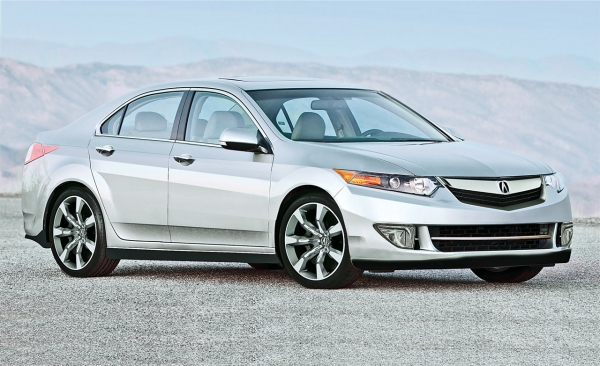
Debuted for the 2009 model year, the Acura TL featured a more aggressive interpretation of Acura's latest styling vocabulary, known as "Keen Edge Dynamic." Featured prominently on the front is Acura's controversial "Power Plenum" upper grille. The size of the car has increased slightly, and as a consequence the wheelbase has been stretched 1.4 inches (36 mm) to 109.3 inches (2,780 mm). The car is also 6.2 inches (160 mm) longer overall, 1.8 inches (46 mm) wider and 0.5-inch (13 mm) taller. Rear legroom improves by 1.3 inches (33 mm) and rear shoulder room increases by 0.5-inch (13 mm). Structural rigidity was increased due to the use of high-strength steel in 47.6 percent of the chassis. The base TL is front-wheel drive and is powered by a 3.5-liter V6 that makes 280 hp (210 kW) and 254 ft·lbf (344 N·m) of torque, an increase of 22 hp (16 kW) and 21 ft·lbf (28 N·m) over the previous 3.2-liter V6. The new TL SH-AWD ("Super-Handling All-Wheel Drive") replaces the previous TL Type-S and is powered by a 3.7-liter V6 that produces 305 hp (227 kW) and 275 ft·lbf (373 N·m) of torque, an increase of 19 hp (14 kW) and 19 ft·lbf (26 N·m) over the 3.5-liter V6 of the Type-S. The 3.7L engine also uses VTEC variable-lift timing on both the intake and exhaust valves (the base TL and previous models only applied VTEC to the intake valves). SH-AWD ("Super Handling" All Wheel Drive) is a multi-vectoring all wheel drive system designed more for performance than for simply providing traction in adverse circumstances. While cruising, the system sends 90% of the power to the front wheels and 10% to the rear wheels. Acceleration puts more torque on the rear wheels. The car can put up to 70% of the total available power to the rear wheels to assist with rapid acceleration, and of that 70%, 100% can be pushed to either the left or right wheel in order to assist the vehicle through a corner. The brakes on the new TL have been increased in size, from the older 11.8" front disc and 11.1" rear disc to the now Ridgeline-sized 12.6" front discs and 13.2" rear disc, still incorporating an internal rear drum e-brake while maintaining hydraulic discs for the foot applied brakes. The bolt pattern on the car is no longer a 5x114.3mm but a 5x120mm for this generation. The SH-AWD model also includes some interior refinements over the base model and is tuned for slightly firmer suspension and steering feedback. It is visually distinguishable from the base model on the exterior by its SH-AWD badge on the trunk, quad exhaust pipes (as opposed to dual exhaust on the base model) and larger air ducts in the front bumper to cool the larger brakes (the base model's turn signal indicators in the bumper extend all the way to the center.) The TL rides on 245/50R17 tires, while the TL SH-AWD has 245/45R18 tires with optional 245/40ZR19 summer performance tires. Both models use electric power steering rather than hydraulic, and a revised five-speed automatic transmission featuring shift paddles on the steering wheel is standard equipment for both models. Acura has announced that a manual transmission will be offered in the 2010 SH-AWD model. The fourth generation Acura TL adds further electronic convenience items, now including a central multifunction display, an eight-speaker 276-watt audio system with a six-disc CD changer, XM Satellite Radio, USB port connectivity (including full iPod control support), and Bluetooth Audio (for streaming music from a cell phone). Both models offer an optional Technology Package, which includes premium Milano leather seats, keyless start, a joystick-based (no longer touchscreen) navigation system updated with a new 8-inch (200 mm) full VGA display and the ability to provide weather information and traffic-based rerouting, and the Acura/ELS audio system with 10 speakers, 440 watts of power, DVD-A[6] and DTS CD compatibility for 5.1 surround sound, as well as an internal hard drive with 13 GB of storage dedicated for audio. With the ELS audio system, audio CDs are automatically ripped to the hard drive upon insertion for future playback. The navigation system also stores its map data on the hard drive (as opposed to the previous model's DVD-based storage), producing faster boot times. For 2012 model, Acura offered a new front and rear styling. The most obvious change is the revamped smaller front grill. Aside from cosmetic changes, the new TL is now equipped with Honda's 6-speed automatic multi-clutch transmission to improve performance and efficiency. This transmission features downshift rev-matching with throttle blip and ability to downshift 2 gears at a time. Additional new features include ventilated seats, new 60GB HDD, blind-spot information system, and upgraded wheels. The 2012 TL retains the base 3.5L and SH-AWD models' 3.7L engines but now gets 2 mpg more in the city (20 mpg) and 3 more mpg on the highway (29 mpg) thanks to less engine friction and the 6 speed automatic transmission. The manual 6 speed transmission will continue to be offered. TL is also 3dB quieter on the highway now as well.

 Elegant Silver Acura RL
 Exotic Acura RL
 Acura RL Hatchback
 Acura RL Steering Wheels
 Acura RL Machine
 Acura RL Interior Seating
 Acura RL Cool Wheels
 -->
-->
 The Acura RDX(Chassis Code TB1) is Acura’s first compact crossover SUV. Originally previewed as the Acura RD-X concept car, the production RDX had its debut at the 2006 New York Auto Show and went on sale on August 11, 2006. The RDX takes over from the MDX as Acura's entry-level crossover SUV, as the MDX continues to grow in size and price. Although the dimensions of the vehicle are similar to that of the Honda CR-V, the RDX uses a unique platform developed to handle the vehicle's advanced all-wheel drive system. A facelifted 2010 model went on sale in August 2009, adopting Acura's power plenum grille seen on its sedan models. Front-wheel drive was also added. The RDX is powered by one of Honda's very few turbocharged gasoline engines. The 2.3-litre straight-4 K23A1 engine has all-aluminum construction, an i-VTEC head, and dual balance shafts. It is also one of the first and only four-cylinder powered luxury SUVs. Honda's variable flow turbocharger reduces turbo lag by using a valve to narrow the exhaust passage at low rpm, increasing the velocity of the exhaust flow and keeping the turbine spinning rapidly. At higher rpm, the valve opens to allow more exhaust flow for increased boost. The engine also features a top-mounted intercooler which receives air from the grille, channeled by ducting under the hood. The Acura RDX engine is rated at 240 bhp (179.0 kW; 243.3 PS) at 6000 rpm with a torque peak of 260 ft·lbf (350 N·m) at 4500 rpm. The U.S. Environmental Protection Agency (EPA) estimated fuel mileage is 19 mpg-US (12 L/100 km; 23 mpg-imp) city and 23 mpg-US (10 L/100 km; 28 mpg-imp) highway miles per gallon. Driving style and the terrain plays an important part in this Vehicle's fuel economy. Uphill driving, frequent lane changes and sudden accelerations can increase turbo usage to increase torque output to the SH-AWD system and thus cause much higher fuel consumption. New more recent EPA mileage estimates as of February 2007 are 17 mpg-US (14 L/100 km; 20 mpg-imp) city and 22 mpg-US (11 L/100 km; 26 mpg-imp) highway. The recommended fuel is premium 91 octane unleaded.
 The Acura RDX comes standard with a five-speed automatic transmission with Acura's SportShift sequential manual shift capability, activated by paddles mounted on the steering wheel. The paddles can be used in Drive (D) to make a gear change with the transmission returning to automatic mode as soon as the vehicle resumes a steady-cruise state. The Sport (S) setting has higher shift points and quicker downshifts, and using a paddle in “Sport” immediately puts the transmission in full manual mode. The RDX also has a version of Acura's Super Handling All-Wheel Drive (SH-AWD), first seen on the flagship RL sedan. The system can vary the front/rear torque distribution from 90/10 to 30/70, depending on whether the vehicle is accelerating, cruising, hill climbing, taking a curve, or encountering poor road conditions. When taking a curve, a pair of magnetic flux clutches in the rear differential can transfer as much as 100% of the available rear torque to the outside wheel. That torque transfer, combined with a 1.7% rear over-rotation of the rear wheel helps rotate the RDX through a turn. The RDX seats five and comes standard with leather seating, a moonroof, automatic climate control, and all the expected power features. The RDX 7-speaker audio system features an in-dash 6-CD changer, which is capable of playing standard Audio CDs, and Data-CDs burned with either MP3 or WMA files, it also plays DVD-A type CDs. The RDX's sound system also includes XM Satellite Radio with a complimentary 3-month subscription. Much of the interior technology introduced in the RL sedan is found in the optional "Technology Package". This package includes the latest version of Acura's navigation system, complete with a rear view camera, XM Nav-Traffic real-time traffic monitoring, and Zagat restaurant reviews. The package also features a 10-speaker Acura/ELS audio system with DTS and Dolby Pro Logic II surround sound. The audio system plays DVD-Audio discs as well. Both stereos come with a 1/8" auxiliary input jack, which may be used to plug in external sources such as iPods. For 2007, Acura also offered an iPod adapter for the RDX, which was wired into the glove box, and allowed the iPod to be controlled through the RDX's sound system interface. Due to hardware incompatibilities the Honda/Acura iPod musiclink has been discontinued as of model year 2008. Current (2011) models come standard with a USB connection that interfaces with Apple inc.® iPod® players and other USB mass storage devices, such as flash drives that contain MP3, WMA6 or AAC music files while being stored in the center console.
 Almost all of the ELS sound system's operations can be activated by voice command, as can most of the operations for the navigation and climate control systems. In addition, the vehicle will interact with most Bluetooth-equipped cell phones. The driver can initiate or receive calls through verbal command. During the call, the sound system will mute and channel the call through the speakers while caller and signal information is displayed on the instrument cluster. The tailgate opens over six-feet high and 60/40 rear seatbacks fold down for a flat cargo area. A hard cargo cover can fit flush on the floor when not needed and is reversible to carry wet or dirty cargo. The cabin includes several storage areas including a lockable center console that can hold a standard size laptop computer. The cargo hold is small size compared to most rivals and does not have the adjustable cargo tracks or a rear parcel shelf. The Acura RDX is the second Acura vehicle to feature the Advanced Compatibility Engineering (ACE) body structure which is designed to absorb energy from a collision. The RDX comes standard with six airbags, including dual front airbags, front side airbags and dual side curtain airbags. The front airbags use a dual-threshold, dual-stage technology that can adjust the timing and speed of each airbag deployment depending on the degree of impact and the driver's or front passenger's seat belt usage. If sensors deem the front passenger too small (less than 65 lb (29 kg)), the front airbag is designed not to deploy. The front passenger's side airbag is also designed to shut off if a child or small statured-adult is leaning into the airbag's deployment path. In the event of a sufficient side impact or roll-over, the side curtain airbag deploys from above the door frames of the affected side, with coverage for both the front and rear occupants on that side, and stays inflated longer than if there were a collision. Front seats have active head restraints and their seat belts are equipped with pre-tensioners and force-limiters. As of November 2006 the RDX was crash tested by the NHTSA, resulting in a perfect "5 Star" rating for driver and passenger frontal crashes, and front and rear side impacts, along with "4 Stars" for rollover.
 Sporty Yellow Acura NSX
 Exotic Acura NSX With Gray Color
 Acura NSX Modification
 Elegant Acura NSX
 Acura NSX Engine
 Acura NSX Interior
 Acura NSX Hatchback


 The Acura TL is a mid-size luxury sports car manufactured by Acura. It was introduced in 1995 to supplant the Acura Vigor and was rebadged for the Japanese-market from 1996 to 2000 as the Honda Inspire and from 1996 to 2004 as the Honda Saber. The TL is Acura's best-selling model, and it has ranked as the second best-selling luxury sedan in the United States behind the BMW 3 Series. Four generations of the Acura TL have been produced to date, with the latest fourth generation TL premiering in 2008 as a 2009 model. The current version is not sold in Japan. The TL "Touring Luxury" debuted as 1996 model, first with the 1996 2.5 TL available with the 2.5 L 176 hp (131 kW) SOHC 20-valve 5-cylinder engine from the Vigor. The 3.2 TL used the 3.2 L 200 hp (149 kW) SOHC 24v V6 from the second generation Acura Legend. The 2.5 TL was positioned as the sporty model and the 3.2 focused more upon a luxurious ride. The very first 1996 Acura TL rolled off the assembly line at Sayama, Japan on March 28, 1995. Sales of the 2.5 TL began in spring 1995, but the 3.2 TL was delayed until fall because of a U.S.-Japan trade dispute. The first generation Acura TL had standard features including dual airbags, antilock brakes, automatic climate control, a cassette/CD player sound system, and power windows and locks. Leather was standard on the more upscale 3.2 TL, while the 2.5 TL featured a firmer suspension setup.
 The first third-generation Acura TL rolled off the assembly line on September 30, 2003. On October 6, 2003, the third generation Acura TL (the 3.2 moniker was dropped) was released for sale in North America. Developed mainly in the United States by a team led by Erik Berkman with bodywork by American Honda designer Jon Ikeda, the new TL was built in Marysville, Ohio, and was derived from the 7th generation US-market Honda Accord. It is powered by a 270 hp (201 kW); later revised to 258 hp (192 kW), based on the new SAE measurement standard for horsepower and 233 lb·ft (316 N·m) of torque, 3.2 L 24 valve SOHC VTEC V6 engine mated to either a 5-speed automatic with SportShift or 6-speed manual. Manual transmission models featured Brembo 4-Piston front brake calipers, a Torsen-type limited slip differential, stiffer anti-roll bars front and rear and performance tires at no additional cost. As of March 2004, Honda offers to the public a factory-sanctioned "tuner package" version of the TL called the TL A-SPEC. This version features a suspension tuned by Makoto Tamamura, an indication of the TL A-SPEC's aggressive engineering. In addition, an underbody kit, spoiler, limited edition A-SPEC steering wheel, "A-SPEC" badge on the back, and 18-inch (460 mm) wheels are standard issue on the A-SPEC package. When installed at purchase, the car's 4 year/ 50,000 miles (80,000 km) warranty applies to the package as well. The third generation TL was also the first car in the American market to include a 6-disc DVD-Audio system, output through an 8-speaker 225-watt system, engineered by Panasonic and tuned by Grammy-award winning Elliot Scheiner. The system also plays back regular audio CDs as well as DTS audio discs, CD-Audio, CD-Rs and CD-RWs but not MP3s. In the United States, all models were also equipped with a Bluetooth HandsFree Link (HFL) system, integrated with the audio system, to allow for hands-free usage of one's cell phone (provided the phone also supports Bluetooth and is compatible with the HFL's hands-free profile). The driver can simply voice-dial the number and carry the entire conversation over the car's built-in audio system; when receiving a phone call a display will show caller ID if it is supported by the phone. The driver also has the capability to transfer current calls between the car and the cell phone. There is also a phone book which can store personal phone numbers within the car's memory. In Canada, the HFL feature was not available on the base model (standard with A-Spec, Technology, and Navigation packages), though the 2005 model year saw HFL becoming standard in all Canadian models. With the built-in XM Radio tuner, owners can elect to pay a monthly subscription after the complimentary 3 months subscription expires from Acura for XM radio, which provides over 100 digital channels via satellite. Sporting an Alpine-designed navigation system, the third generation TL also accepts voice commands like "find nearest police station" or "go home." The navigation system features an 8-inch (200 mm) touchscreen LCD, which allows for easy viewing of the road ahead. The JDM Honda Inspire debuted around four and a half months earlier (on June 11, 2003) and marked the branching out of the TL line from the Inspire. The Inspire is basically a seventh-generation US-market Honda Accord V6 with minor trim changes, and the addition of Variable Cylinder Management, which shuts off half of the engine when not needed to boost fuel economy. The Saber was discontinued and the new Inspire is being sold at Clio, Primo, and Verno dealerships. The TL became Acura's best-selling luxury sedan in 2004 with more than 79,000 sold that year.
 Debuted for the 2009 model year, the Acura TL featured a more aggressive interpretation of Acura's latest styling vocabulary, known as "Keen Edge Dynamic." Featured prominently on the front is Acura's controversial "Power Plenum" upper grille. The size of the car has increased slightly, and as a consequence the wheelbase has been stretched 1.4 inches (36 mm) to 109.3 inches (2,780 mm). The car is also 6.2 inches (160 mm) longer overall, 1.8 inches (46 mm) wider and 0.5-inch (13 mm) taller. Rear legroom improves by 1.3 inches (33 mm) and rear shoulder room increases by 0.5-inch (13 mm). Structural rigidity was increased due to the use of high-strength steel in 47.6 percent of the chassis. The base TL is front-wheel drive and is powered by a 3.5-liter V6 that makes 280 hp (210 kW) and 254 ft·lbf (344 N·m) of torque, an increase of 22 hp (16 kW) and 21 ft·lbf (28 N·m) over the previous 3.2-liter V6. The new TL SH-AWD ("Super-Handling All-Wheel Drive") replaces the previous TL Type-S and is powered by a 3.7-liter V6 that produces 305 hp (227 kW) and 275 ft·lbf (373 N·m) of torque, an increase of 19 hp (14 kW) and 19 ft·lbf (26 N·m) over the 3.5-liter V6 of the Type-S. The 3.7L engine also uses VTEC variable-lift timing on both the intake and exhaust valves (the base TL and previous models only applied VTEC to the intake valves). SH-AWD ("Super Handling" All Wheel Drive) is a multi-vectoring all wheel drive system designed more for performance than for simply providing traction in adverse circumstances. While cruising, the system sends 90% of the power to the front wheels and 10% to the rear wheels. Acceleration puts more torque on the rear wheels. The car can put up to 70% of the total available power to the rear wheels to assist with rapid acceleration, and of that 70%, 100% can be pushed to either the left or right wheel in order to assist the vehicle through a corner. The brakes on the new TL have been increased in size, from the older 11.8" front disc and 11.1" rear disc to the now Ridgeline-sized 12.6" front discs and 13.2" rear disc, still incorporating an internal rear drum e-brake while maintaining hydraulic discs for the foot applied brakes. The bolt pattern on the car is no longer a 5x114.3mm but a 5x120mm for this generation. The SH-AWD model also includes some interior refinements over the base model and is tuned for slightly firmer suspension and steering feedback. It is visually distinguishable from the base model on the exterior by its SH-AWD badge on the trunk, quad exhaust pipes (as opposed to dual exhaust on the base model) and larger air ducts in the front bumper to cool the larger brakes (the base model's turn signal indicators in the bumper extend all the way to the center.) The TL rides on 245/50R17 tires, while the TL SH-AWD has 245/45R18 tires with optional 245/40ZR19 summer performance tires. Both models use electric power steering rather than hydraulic, and a revised five-speed automatic transmission featuring shift paddles on the steering wheel is standard equipment for both models. Acura has announced that a manual transmission will be offered in the 2010 SH-AWD model. The fourth generation Acura TL adds further electronic convenience items, now including a central multifunction display, an eight-speaker 276-watt audio system with a six-disc CD changer, XM Satellite Radio, USB port connectivity (including full iPod control support), and Bluetooth Audio (for streaming music from a cell phone). Both models offer an optional Technology Package, which includes premium Milano leather seats, keyless start, a joystick-based (no longer touchscreen) navigation system updated with a new 8-inch (200 mm) full VGA display and the ability to provide weather information and traffic-based rerouting, and the Acura/ELS audio system with 10 speakers, 440 watts of power, DVD-A[6] and DTS CD compatibility for 5.1 surround sound, as well as an internal hard drive with 13 GB of storage dedicated for audio. With the ELS audio system, audio CDs are automatically ripped to the hard drive upon insertion for future playback. The navigation system also stores its map data on the hard drive (as opposed to the previous model's DVD-based storage), producing faster boot times. For 2012 model, Acura offered a new front and rear styling. The most obvious change is the revamped smaller front grill. Aside from cosmetic changes, the new TL is now equipped with Honda's 6-speed automatic multi-clutch transmission to improve performance and efficiency. This transmission features downshift rev-matching with throttle blip and ability to downshift 2 gears at a time. Additional new features include ventilated seats, new 60GB HDD, blind-spot information system, and upgraded wheels. The 2012 TL retains the base 3.5L and SH-AWD models' 3.7L engines but now gets 2 mpg more in the city (20 mpg) and 3 more mpg on the highway (29 mpg) thanks to less engine friction and the 6 speed automatic transmission. The manual 6 speed transmission will continue to be offered. TL is also 3dB quieter on the highway now as well.


 The Honda Integra (sold in some markets as Acura Integra) is a compact sport coupe made by Honda during the years 1985 to 2007. It is usually a two door front wheel drive car that is able to house four passengers with a four door variant available. The first generation Integras actually came with two different engines. Although they shared the same engine code (D16A1), there were a few differences. The engine differed in the years 1986 to 1987 and 1988 to 1989. The two engines are commonly called the "Browntop" and "Blacktop" due to the color of their valve covers. The "browntop" came in 1986 and 1987 Integras while the "blacktop" came in 1988 and 1989 models. The improvements in the "blacktop" engine included lighter rods, domed pistons for slightly higher compression, and an electric advance distributor (the "browntop" came with a vacuum advance distributor). The overall gain in performance was about 5 hp (3.7 kW) for 118 hp (88.0 kW). The 1990-1993 generation Honda Integra bears the code E-DA. This is the most important generation of models in Honda's history as this is where the legendary VTEC system was introduced. The very first VTEC engine was the 160PS version of the DOHC VTEC B16A. The first model to use this engine was the DA6 Honda Integra RSi/XSi, introduced by Honda in April 1989. Thus as the official Japanese Domestic Market(JDM) Honda factory manual for the DA6 states, the first VTEC engine in the world is a B16A bearing the serial number 1000001 and was used in an Integra RSi/XSi which bore the chassis serial 1000001. There were two main variants of the top DOHC VTEC model, the RSi and the XSi. The RSi was the base model without any options, while XSi was the fully optioned variant with climate control and optional sunroof and ABS. This top ranked DOHC VTEC model was complemented by more docile models that used dual-carburator or PGM-Fi versions of the versatile ZC engine but in the more compact SOHC configuration. Similarly there were base and full options variants of these SOHC engine Integras coded RX/RXi and ZX/ZXi respectively.VTEC engagement starts at about 5,700RPM for theses motors,B16A,B17. In 1991, the range received minor cosmetic changes. More significantly the B16A engine was enhanced to current generation specs increasing compression 10.4:1 and wider cam-profiles producing 170PS. The 1991 revision also saw the introduction of the first 1.8L engined Integra. The DOHC (non-VTEC) B18A was first used on the 1991-1993 Integra ESi producing 140PS (103KW) which came with an optional limited slip differential (LSD).
 Honda debuted the third generation model in 1993 in Japan. Acura followed in 1994. It had an unusual four headlight front end design which was dubbed "bug eyes" by some enthusiasts. Standard power from the B18B engine increased to 142 hp (105.9 kW), and the GS-R received the B18C1 VTEC engine, equipped with a dual-stage intake manifold, ported exhaust manifold and a displacement increase (from the second generation integra) from 1.7 liters to 1.8 liters, bringing power up to 170 hp (126.8 kW). The bug eye model was known in Japan as Integra Si and it powered by a B18C engine with a power of 180Hp which later became the type R power lump. Dealer installed options for the third generation Integra included: security system, alloy wheels, trunk mat, splash guards, fog lights, and CD changer. The fourth generation Integra, produced from 2002 on, was renamed the Acura RSX for the United States, Canada and Hong Kong in accordance with Acura's new alphabetical naming scheme. It also had an entirely new engine, the K-series. The Integra came in two models in the United States, the RSX base model, and the RSX-S boasting the K20A2 engine from 2002 to 2004, while the 2005 and 2006 RSX-S came with a K20Z1. The RSX was still sold as a Honda Integra in Japan and Australia, markets where Acura did not exist. In March 2006, Honda announced that the Integra would be discontinued in June after its final 300 cars were sold, due to the shrinkage of the coupe market. The reaction of the consumers towards the discontinuation, however, forced Honda to extend production until July 2006 and produce 150 more Integras. The Acura RSX was discontinued as well, as the RSX did not fit within the confines of Acura's re-structured market strategy, and that the introduction of the similarly powerful and less expensive 2006 model-year Honda Civic Si was there to fill in the gap left by the RSX.
 Outstanding cornering response and enhanced braking performance also are a hallmark of this limited edition vehicle. This is made possible by features such as: an overall vehicle weight reduction by 93 pounds (compared to the current Integra GS-R); lower overall vehicle height (by 15 mm compared to the GS-R) and aerodynamic refinements — such as a chin spoiler, wing-type rear spoiler and body-colored side sills – that result in 30% less lift (CI) and 1% less drag (Cd); racetrack-calibrated suspension, high-performance tires and lightweight aluminum alloy wheels in Championship White; larger disk brakes with performance-oriented calipers; refined Anti-Lock Braking System (ABS); reinforced unit-body structure. The interior of the Type R also has a distinctly racing look and sporty feel. Features include sport-style seats, a serial number plate on the center console, a leather-wrapped steering wheel and shifter knob, carbon fiber-like instrumentation design with amber illumination, and an exclusive Type R ignition key. Powered by compressed Nitrogen an electric 3way valves an a ten switch box. For the Up, down, an side to side. The interior is a custom silver an black with chrome flake. The seats are rapped in white vinal with chrome flake. The center consil was fiberglassed for a PS2. It has a 7 in flip out TV in the dash an two TV’s in the headrest. Indiglo gages for better look at night. The stereo is 2 JL 12′s powered by a audioban amp. In a custom trunk enclosure wrapped in black cloth with a floating Nitrogen bottle in the center! T


