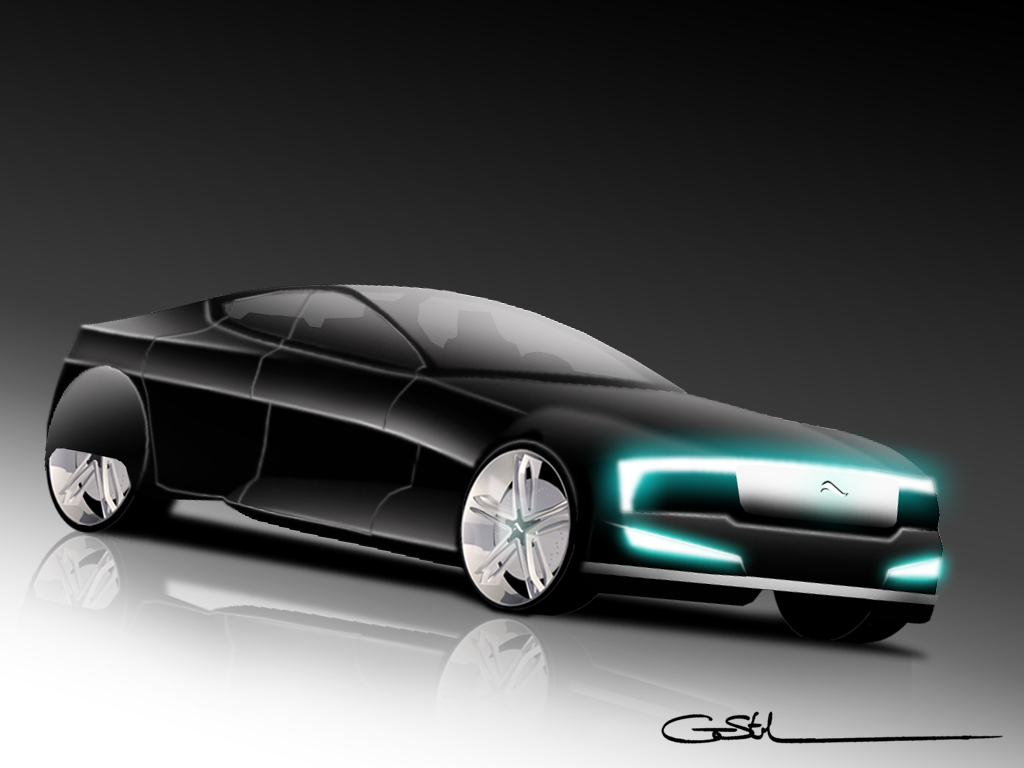
Jaguar C-X75 is a plug-in hybrid, two-seat, concept car from Jaguar which debuted at the 2010 Paris Motor Show. The C-X75 produces 778 horsepower through four electric motors, each of which drives one of the four wheels. The batteries driving these motors are recharged using two diesel-fed micro gas turbines instead of a conventional four-stroke engine. The C-X75 was named in honor of Jaguar’s 75th anniversary, the C stands for concept and the X for experimental. In terms of performance, Jaguar envisions future super cars reaching 330 km/h (205 mph) and accelerating from 0 to 100 km/h (0 to 62 mph) in 3.4 seconds and 80 to 145 km/h (50 to 90 mph) in 2.3 seconds. It is powered by four 145 kW (194 hp) electric motors – one for each wheel - which produce 780 hp (582 kW) and a total torque output of 1,600 N·m (1,180 ft·lbf). Inherent in the drivetrain is the ability to independently vector torque to each wheel across the full speed range. The micro gas turbines developed in a partnership with Bladon Jets generate enough electricity to extend the range of the car to 900 km (559 mi) while producing 28 grams of CO2 per kilometre on the EU test cycle. While running solely on battery power, the C-X75 has an all-electric range of 110 km (68 mi). Among other advantages, the micro turbines used in the C-X75 can be run on a range of fuels including diesel, biofuels, compressed natural gas and liquid petroleum gas. Jaguar also focused on the aerodynamics in order to improve performance. For example, the carbon-fibre rear diffuser, an element in guiding airflow under the car and creating downforce, includes an active aerofoil and is lowered automatically as speed increases. Moreover, the C-X75 features an extruded and bonded, aerospace-inspired, aluminium chassis, saving on weight and improving sustainability and performance.
The jaguar (Panthera onca) is a big cat, a feline in the Panthera genus, and is the only Panthera species found in the Americas. The jaguar is the third-largest feline after the tiger and the lion, and the largest in the Western Hemisphere. The jaguar's present range extends from Southern US and Mexico across much of Central America and south to Paraguay and northern Argentina. Apart from a known and possibly breeding population in Arizona (southeast of Tucson), the cat has largely been extirpated from the United States since the early 20th century.
This spotted cat most closely resembles the leopard physically, although it is usually larger and of sturdier build and its behavioral and habitat characteristics are closer to those of the tiger. While dense rainforest is its preferred habitat, the jaguar will range across a variety of forested and open terrain. It is strongly associated with the presence of water and is notable, along with the tiger, as a feline that enjoys swimming. The jaguar is largely a solitary, opportunistic, stalk-and-ambush predator at the top of the food chain (an apex predator). It is a keystone species, playing an important role in stabilizing ecosystems and regulating the populations of the animals it hunts. The jaguar has an exceptionally powerful bite, even relative to the other big cats. This allows it to pierce the shells of armoured reptiles and to employ an unusual killing method: it bites directly through the skull of prey between the ears to deliver a fatal bite to the brain.
The jaguar is a near threatened species and its numbers are declining. Threats include habitat loss and fragmentation. While international trade in jaguars or their parts is prohibited, the cat is still frequently killed by humans, particularly in conflicts with ranchers and farmers in South America. Although reduced, its range remains large; given its historical distribution, the jaguar has featured prominently in the mythology of numerous indigenous American cultures, including that of the Maya and Aztec.
The new Jaguar XKR is a sophisticated grand tourer with the heart of a true sports car, combining effortless high-performance and state-of-the-art V8 powertrains with a new level of advanced technologies, intuitive control and Jaguar's superbly crafted, new-fashioned luxury interiors. All-new AJ-V8 Gen III 5.0-litre direct-injection engines bring significant improvements in power and torque and they do so without compromising fuel economy and emissions. In both respects, every model in the new XK range, in spite of such large performance and flexibility gains across the board, is comparable to their predecessors. The impressive fuel economy for such powerful cars is attributable to the combination of the XK range's lowest-in-class weight and the all-new AJ-V8 Gen III engines. As well as the intrinsic advantages of the engines' light weight, these advanced all-aluminium four-cam power units have a number of features that deliver power with very high efficiency, including spray-guided direct injection (SGDI), which improves performance and economy, and dual independent variable cam timing (DIVCT), which benefits performance and economy, while also reducing emissions.
The Performance on a new level In naturally aspirated form, the new AJ-V8 Gen III 5.0-litre engine delivers 385PS (SAE) and 380lb ft (515Nm) of torque - respectively 26 and 23 percent more than its 4.2-litre predecessor. The Jaguar XKR's supercharged 5.0-litre version delivers a mighty 510PS (510bhp SAE) and 461lb ft (625Nm) of torque - improvements of 23 and 12 percent respectively over the supercharged 4.2-litre engine. On the road, while maximum speed remains under electronic control at 155mph (250kph), these power and torque gains allied to the lightweight aluminium body architecture of the XK dramatically improve acceleration times. For the naturally aspirated XK, 0-60mph is reduced to 5.2 seconds from 5.9 seconds (and 0-100kph from 6.2 to 5.5 seconds); for the supercharged Jaguar XKR, 0-60mph is reduced to 4.6 seconds from 4.9 (and 0-100kph to 4.8 seconds from 5.2). The supercharged Jaguar XKR is also impressively efficient, with combined fuel economy of 23.0mpg and a CO2 rating of 292g/km - an improvement over the previous Jaguar XKR - and 16 and 17 percent better, respectively, than the equivalent figures for the BMW M6. Crucially, however, the naturally aspirated XK also continues to better its closest rivals on economy and CO2 ratings, with an average consumption of 25.2mpg and a CO2 figure of 264g/km - seven percent better than the equivalent figures for the Mercedes-Benz SL500 thanks to its fuel efficient engine and significantly lower kerb weight: 1660kg compared to the SL500's 1845kg.
The Exterior design Visible changes on the new XK and XKR reflect the significant changes under the skin. Carefully revised exteriors take the seductive, elegant lines that define Jaguar's new design language and interpret them for a beautiful 2+2 sports car whose shape is even more taut, powerful and athletic. Evoking the essence of performance long before it moves, the new XK family shape is unmistakably 'new-school' sporting Jaguar: wholly contemporary, finely sculpted, efficiently packaged and precisely detailed. The exterior changes for the naturally aspirated XK models and the supercharged Jaguar XKR are highlighted by a distinctive and purposeful new front end design, new LED rear lights and a new lower rear body valance. New LED rear light clusters incorporating fog lamps plus twin reversing lamps (rather than the previous single lamp units) give every new XK a unique 'night time signature', while LED technology is also included in the integrated side repeater and approach lamps in the new exterior mirrors. Every new XK also features revised body-coloured side power vents.
The Interior design Contemporary, sporting luxury, exceptional quality of craftsmanship, and Jaguar's renowned attention to detail are the keynotes of the new XK range's enhanced interiors. The cabin is clean, elegant and spacious, and remains entirely in harmony with the sporting character of the revised exterior. The luxury character of the new XK and XKR, however, is guaranteed, regardless of the customer's choice of body style - hard-topped coupe or fabric-roofed convertible. Both benefit from the inherent strength of Jaguar's lightweight aluminium architecture, which means that as well as being the lightest body structure in its class, the body shells also have the highest torsional strength. And that exceptional rigidity, with or without a fixed roof, means creak and rattle-free refinement, even on unforgiving surfaces.
Beyond that, the convertible's triple-lined fabric roof gives a level of fit and stability, even at very high speeds, that minimises wind noise and other road noise and includes a luxurious interior finish almost indistinguishable from a fixed roof. In addition, XK Portfolio and XKR models feature luxurious Jaguar Suedecloth headlinings as standard. The folding roof can be powered up or down at the touch of a button in less than 18 seconds. And when it is lowered, the convertible's flush-folding roof retracts completely into the bodywork behind the rear seats, under a smooth cover that retains the elegant, sporting lines of the car. A roll-over protection system, which remains hidden unless it is needed, deploys instantaneously as necessary to provide occupants with the highest levels of protection in the event of an incident. Many of the other changes emphasise high levels of Jaguar craftsmanship with new jewel-like touches. The three-spoke steering wheel now has a leather-wrapped lower spoke, and Jaguar's striking 'growler' badge. The new Jaguar XKR's instruments further emphasise its performance character with red pointers, while all models adopt a new white illumination for their instruments. New heated and cooled front seats are standard equipment on the new XK Portfolio and on XKR with the optional R Performance interior (dependent on market), and available as an option on the XK. The XK features 10-way seat adjustability for both driver and passenger seats, with heating and memory functions as standard - while the Jaguar XKR seats have similar functions but with the unique R seat style. The XK Portfolio and XKR with the optional R Performance interior have 16-way adjustable seats with heating and memory functions, adjustable side bolsters and new cooled seats as standard.
The door casings are even more luxuriously crafted than before, with saddle-stitched lines and a new interlayer to give a softer touch to the top shoulder of the casing. The leather door pulls also introduce twin-needle stitching and a soft-feel interlayer. In each door, the modified seat switch pack now includes single-piece chrome 'highlight' switches. There is a wide choice of interior colour options, including a new combination for the XK Portfolio and XKR of Ivory seating with Oyster upper cabin trim and Oyster carpets. Bond grain leather is standard on the new XK interior, and an even higher quality soft-grain leather with contrast stitching is standard in the XK Portfolio and the new R Performance Jaguar XKR.
The most advanced Jaguar V8 engines ever Since the first XK was launched in 1948, generations of powerful yet refined engines have played a crucial role in establishing the unique character and pedigree of Jaguar cars. Now, the new 5.0-litre V8 direct-injection engines continue that tradition, delivering increased power and torque with reduced emissions and impressive fuel economy. Available in two versions - the supercharged 510PS and naturally aspirated 385PS - the new AJ-V8 Gen III engines exemplify Jaguar's reputation for innovation and engineering excellence.
Light, robust and very strong The new AJ-V8 engines are built around a stiff, all-new, aluminium block with cast-in iron liners and cross-bolted main bearing caps to reduce noise, vibration and harshness. The blocks are high pressure die-cast, providing a superior finish and greater dimensional accuracy. The engines use aluminium heads, with four valves per cylinder and spheroidal-graphite cast-iron crankshafts and forged steel connecting rods. The cylinder heads for the first time are specified with a secondary (recycled) aluminium alloy thus reducing the environmental impact of manufacturing the new engine. The new 5.0-litre direct injection petrol engines are more compact than their predecessors. Overall engine length has been reduced by 24mm by relocation of the oil pump within the engine architecture. This length reduction - apparently a small amount - improves engine bay packaging in support of enhanced safety cell performance while ensuring overall engine weight is virtually unchanged.
Sleek, sporting and sophisticated, the all-new Jaguar XJ brings a daring new spirit to automotive luxury. It offers a seductive mix of striking design, breathtaking performance and engineering without compromise.
The new Jaguar XJ is the epitome of fluid, contemporary automotive style. The elongated teardrop shape of the side windows establishes the car's silhouette and lies at the heart of its flowing design. And the new Jaguar XJ doesn't just look streamlined: it shares a drag coefficient of 0.29 with the Jaguar XF saloon, making them the most aerodynamic Jaguars ever.
A coup� profile cloaks a cabin that offers comparable levels of space to saloons with a more conventional style. There is generous accommodation for five occupants, while long-wheelbase models provide rear-seat passengers with even greater levels of comfort thanks to an additional 125mm of rear legroom.
The exquisitely designed interior has a strong sporting character throughout. A panoramic glass roof, standard on all models, dramatically enhances the sense of light and space inside the new Jaguar XJ. And in keeping with its status as the ultimate four-door Jaguar, the XJ introduces a new generation of interior technologies, pioneering the use of display and infotainment systems such as the innovative Virtual Instrument dials and optional 1200W Bowers & Wilkins premium surround sound system.
At the heart of the all-new Jaguar XJ's construction is a next-generation application of Jaguar's unique lightweight vehicle architecture. Primarily aluminium, but also using magnesium and composite alloys, this allows Jaguar to produce a significantly lighter and stiffer body - the lightest in its class. The new structure - which retains the same aerospace-based riveting and bonding processes - has been refined using these advanced materials to deliver improved strength, enhanced refinement and superior safety performance.
The new Jaguar XJ offers the choice of four powerful and refined engines, which use the latest powertrain technology to deliver an outstanding combination of performance and class-leading efficiency. The supremely powerful supercharged 510PS 5.0-litre AJ-V8 Gen III will head the line-up, with a 0-60mph time of 4.7 secs (0-100kph in 4.9 secs); 470PS supercharged and 385PS naturally aspirated petrol V8s are also available, dependent on market.
A no-compromise diesel alternative is provided by the formidable 275PS 3.0-litre AJ-V6D Gen III. With twin sequential turbochargers, this is an engine that delivers on every aspect of the Jaguar driving experience, marrying tremendous drive (0-60mph in 6.0 secs, 0-100kph in 6.4 secs) with impressive fuel economy and CO2 emissions (40.1mpg and 184g/km of CO2).
The all-new Jaguar XJ delivers a driving experience that is just as memorable as the car's appearance. Benefitting from technologies pioneered on the exciting new Jaguar XFR and Jaguar XKR models, including continuously variable damping (Adaptive Dynamics), electronically controlled rear differential (Active Differential Control) and a quick ratio power-steering system, the new Jaguar XJ combines responsive, sporting dynamics with the refined, supple ride expected from a luxury Jaguar.
With its unique lightweight aluminium body structure and new, advanced powertrains, the all-new Jaguar XJ already has a head start when it comes to sustainable performance. The aluminium body uses more than 50 percent recycled material, with a plan to increase this to 75 percent. Body panels made from recycled material use only 5 percent of the energy required for new aluminium, equating to a potential saving of three tonnes of CO2 per vehicle.
THE CONCEPT The all-new Jaguar XJ's distinctive lines mark the next bold evolution of Jaguar's new design language. The striking elongated teardrop shape of the side window graphic establishes the car's streamlined profile, and is balanced by a dramatic lower swage line emanating from the front wheels that reinforces the vehicle's forward stance. The new Jaguar XJ's sleek lines are complemented by a taut waistline, which further accentuates the impression of length and elegance and creates a natural tension as it fades from the front arch into the middle section of the car before reappearing as a strong haunch towards the rear.
Bold, confident face The face of the XJ is confident, with a wide front track and short overhangs contributing to the finely judged proportions. The nose of the car follows Jaguar's new design language, with a bold and assertive treatment: the powerful mesh grille and slim xenon headlamps creating a strong road presence.
The strong, muscular lower half of the car is contrasted with the slim and graceful quality of the roofline, which takes inspiration from the original 1968 XJ saloon. The wrap-around rear screen reduces the visual weight of the pillars, and gives the impression of an exotic 'floating' roof.
And the new Jaguar XJ doesn't just look sleek and streamlined: it is, alongside the XF, the most aerodynamic Jaguar ever. The car has a drag coefficient (Cd) of 0.29, and, equally importantly, outstanding high-speed stability.
A key factor in achieving this highly efficient aerodynamic performance was the extensive use of Computational Fluid Dynamics (CFD) to refine the shape long before the car ever saw a wind tunnel. Taking the process pioneered on the XF programme to a new level of sophistication, more than 400 detailed CFD studies were performed during the initial design phase.
Every area of the new Jaguar XJ - from the outer skin to the composite undertray to the fine grille meshes of the cooling system - was optimised using this process. Key areas included the profile of the rear decklid, which was engineered to ensure that the airflow was controlled without the need for a spoiler. As well as reduced drag and impressively low wind noise, the overall shape achieves aerodynamic loads that are carefully balanced between front and rear axles to ensure optimum handling balance and high-speed stability.
Dramatic LED lights The rear end is notable for its pure, sculpted shape, with a conscious absence of unnecessary ornamentation. The sheet metal of the rear panel retains its pure form, with a single leaping Jaguar motif making a strong, confident statement. The LED light clusters wrap stylishly over the rear wings, and feature three dramatic red, vertical strips.
Architectural interior design The overriding impression from the interior is a sense of personal space, a feeling enhanced by the clean, simple form of the leather-wrapped instrument panel sitting low across the vehicle. At the sides of the cabin, a bold architectural wood veneer sweeps forward from the doors to meet at the front of the car, emphasising the new Jaguar XJ's powerful, dynamic character. This linear, modern use of wood helps to create a truly welcoming environment.
The panoramic glass roof has been from the outset an integral part of the design concept of the all-new Jaguar XJ. It enables a lower, more streamlined roofline, and also dramatically enhances the feeling of light and space within the car. The roof's opening mechanism slides the glass upwards and outwards, so that headroom is never compromised. A dark tint and reflective coating prevent the interior from overheating under strong sunlight, while twin electric blinds provide another level of privacy and sun screening.
THE TECHNOLOGY In keeping with its position as the ultimate Jaguar saloon, the all-new Jaguar XJ pioneers the use of advanced new technologies, driver displays and infotainment systems that set an exciting new benchmark within its segment.
As the driver is greeted by the signature Jaguar 'handshake' - the circular knurled aluminium rotary control of the JaguarDrive Selector� rising into the driver's palm - stylish 3D animations materialise in the virtual instrument cluster and on the central Touch-screen, giving an immediate signal that the new Jaguar XJ takes a revolutionary approach to the way information is displayed in the vehicle.
Sophisticated virtual instrumentation There is no physical instrument cluster display in the all-new Jaguar XJ. Instead, a 12.3-inch high-definition screen, which uses sophisticated - and beautifully detailed - virtual instruments, provides all of the functions performed by traditional dials. Jaguar's designers have also taken advantage of the freedom provided by virtual instrumentation to help prioritise the most useful information as well as creating a real sense of theatre for the driver.
As the XJ starts, three virtual dials build before your eyes: the centre dial houses a speedometer, flanked on the right by a rev counter and on the left by an information window with fuel and temperature gauges.
To maximise clarity, the display employs a 'spotlight' effect to highlight the areas showing the most important information, such as the current speed or engine revs. When required - for example, if fuel is running low, or the driver is selecting a radio station - the rev counter fades away to be temporarily replaced by the required warning message or menu.
The prioritisation goes to another level when the driver who is looking for even more sporting performance and handling selects the XJ's Dynamic mode. In this case, the dials assume a sporting red hue and feature a bold gear position indicator which glows red as you reach the rev limiter.
The enhanced exterior styling of the Jaguar XFR moves those sporting credentials on even further, to deliver the ultimate expression of Jaguar's new saloon car design language - carrying a number of visual design cues that are intrinsic to Jaguar's 'R' car philosophy. Its unique front-end design has a larger lower grille with new black-finished mesh, plus chrome outboard air intakes. The upper mesh grille retains XF's bright finish, while the bonnet carries distinctive louvres, like those on the XKR sports car.
The Jaguar XFR also features bold new sill extensions, while the rear bumper adds a unique body-coloured lower valance panel incorporating the 'R' signature of four large, bright-finished tail pipes. The new bootlid spoiler has a significant aerodynamic effect. Developed in conjunction with the new front bumper design, it further improves the Jaguar XFR's front/rear lift balance, and therefore its high-speed stability. A new exterior mirror design also offers aerodynamic improvements, plus improved functionality with its LED side repeaters.
The Jaguar XFR's sporting character is clearly apparent in the 20-inch Nevis alloy wheels. It is the only car in its class to offer this size of wheel as standard specification. Those twin-seven-spoke wheels bear the wording 'Jaguar Supercharged' embossed around their centres, and are wrapped tightly around silver-grey brake callipers, which carry the evocative 'R' logo. The R badge also appears on the right-hand side of the boot lid drop panel, to complete the XFR's external visual identity.
The new Jaguar XFR is offered with a select palette of just eight exterior colours: Ultimate Black, Indigo, Liquid Silver, Lunar Grey, Porcelain, Botanical Green, Kyanite Blue and Salsa. All except Salsa and Porcelain are metallic colours and, within the XF range, Salsa and Kyanite Blue are unique to Jaguar XFR. For each colour - as across the entire XF range - Jaguar suggests a 'Designer's Choice' of the leather trim colours that best complement each body colour and the Warm Charcoal upper facia that is standard on every Jaguar XFR.
The interior design theme is modern and individual. The cabin environment is uniquely Jaguar and in the XFR more details hint at the car's performance. A full soft grain leather interior is standard, with four colour choices - Warm Charcoal, Warm Charcoal/Red Zone, Warm Charcoal/London Tan, and Ivory. A new Dark Oak veneer is the standard finish for the Jaguar XFR's wood-trimmed areas. New 18x14-way adjustable sports seats have electrically adjustable squab bolsters for significantly improved support at higher cornering speeds. Each Jaguar XFR seat has the 'R' logo embossed on its squab and the front seats have leather seat-back map pockets.
The fascia introduces a unique, dark mesh aluminium finish, and another discreet 'R' badge on the passenger side of the instrument panel. The speedometer and tachometer have the unique sporting signature of red dial pointers, and carry the 'Supercharged' motif. And at start-up, the 'R' logo appears on the Touch-screen as part of the XFR 'driver handshake' sequence.
The most advanced Jaguar V8 engines ever The supercharged 5.0-litre V8 that powers the new XFR is Jaguar's new flagship engine, but it is only half of the petrol engine story - a naturally-aspirated version of the all-new engine brings additional advanced technologies and performance to other models in the XF range.
Light, robust and very strong The all-new 5.0-litre V8 petrol engines are built around a stiff, all-new, aluminium block with cast-in iron liners and cross-bolted main bearing caps to reduce noise, vibration and harshness. For the first time at Jaguar the blocks are high-pressure die-cast, providing a superior finish and greater dimensional accuracy. The engines use aluminium heads, with four valves per cylinder and strong, spheroidal-graphite cast-iron crankshafts and forged steel connecting rods. The cylinder heads for the first time are specified with a secondary (recycled) aluminium alloy, reducing the environmental impact of manufacturing the new engine.
The new 5.0-litre V8 engines are more compact than their predecessors. Overall engine length has been reduced by 24mm by relocation of the oil pump within the engine architecture. This length reduction improves engine bay packaging in support of enhanced safety cell performance while ensuring overall engine weight is virtually unchanged.
Direct injection - power with economy One of the key features of the new petrol engines is an industry-first, centrally-mounted, multi-hole, spray-guided fuel injection system, delivering fuel at a pressure of up to 150bar directly to the cylinder. This substantially contributes to improved low-speed, dynamic response. The positioning of the injectors ensures fuel is precisely delivered to the centre of the combustion chamber, maximising air-fuel mixing, and improving combustion control. Fuel is delivered via twin, high-pressure fuel pumps that are driven via an auxiliary shaft in the all-new engine block.
The charge-cooling effects of the direct-injection fuel system have allowed the compression ratio of the naturally aspirated engine to be raised to 11.5:1, further improving the engine economy. The supercharged engine also benefits from an increase from 9.1:1 on the previous 4.2-litre version to 9.5:1.
During the engine warm-up phase, the combustion system employs multiple injection mode strategies to deliver 50 percent more heat for fast catalyst warm-up and substantially reduced emissions.
Torque-actuated Variable Camshaft Timing improves efficiency A new type of variable camshaft timing system (VCT) introduces another new technology. The four VCT units are activated by the positive and negative torques generated by opening and closing the intake and exhaust valves, instead of by oil pressure. This has allowed the engine oil pump to be reduced in size, saving energy and reducing fuel consumption.
VCT units work independently on all four camshafts with 62 degrees of authority on the inlet cams and 50 degrees of authority on the exhaust cams. Timing is optimised by the engine control unit for torque, power and economy at every point in the engine's speed range.
The response rate of the new VCT units is up to three times faster than before, with actuation rates in excess of 150 degrees per second. This delivers a more immediate engine response to the driver's demand.
The naturally aspirated engine is also equipped with camshaft profile switching (CPS) on the inlet camshaft. Depending on the engine's running conditions and the demands of the driver, the CPS will switch between a profile that is ideal for low-speed driving, and another which gives increased valve lift for high performance.
The new Jaguar XF is already acclaimed as a key element in the revitalization of the Jaguar brand, with its new generation of beautiful fast cars. But now the car that defines Jaguar sporting luxury is even better, with major powertrain changes and a wider range of models - including a stunning new, supercharged Jaguar XFR.
The 2010 model year Jaguar XF features all-new 5.0-liter direct-injection V8 engines. There are also significant trim and specification changes - including many new features unique to the new XFR - and the introduction of a new Portfolio derivative.
The Jaguar XF was soon recognized as a dramatic expression of a bold new Jaguar design language. It also soon became apparent that here was a car where the driving experience exceeded the expectations created by the striking appearance. Now, the new XFR takes this driving experience to new levels, shifting the balance even further towards dynamic performance while still retaining the Jaguar XF's core values as a refined and luxurious sports sedan. Power comes from an all-new 5.0-liter direct-injection supercharged V8 engine delivering 510bhp and 461lb-ft of torque. Immediately recognizable thanks to unique new 20-inch wheels, a new front end design with revised chrome air intakes, 'Supercharged' hood louvres, four polished exhaust tailpipes, an aerodynamically functional rear spoiler and side sills, the new XFR also sports discreet 'R' badging.
The attributes that marked out the Jaguar XF at launch are still very much new and in the public eye. The four-door XF has the visual excitement of a coupe, but room inside for five adults to enjoy an interior wholly contemporary in style yet uniquely Jaguar.
Simplicity and clever use of space are key to the Jaguar XF's interior design and this is unchanged in the new generation. For the driver, this is centered on the compact packaging of the JaguarDrive Selector� transmission interface. The beautiful cast alloy Selector has already gained recognition for its part in the distinctive XF 'welcoming handshake'; a sequence in which the illuminated stop/start button pulsates like a heartbeat until pressed, when the JaguarDrive Selector� rises into the driver's hand and the rotating fascia vents silently open.
Features such as this have already attracted more than 30,000 customers to the new Jaguar XF - and now, in many instances, they have been enhanced even further. The combination of aluminum dashboard, satin or gloss wood veneers, tailored instrument and door panels with twin-needle stitching as standard, plus Phosphor Blue halo illumination and interior mood lighting, set the Jaguar XF's cabin as far apart from its competitors as its exterior styling.
The new engines are Jaguar's most efficient ever, and they deliver power and performance at a higher level across the board. In the case of the supercharged engine, compared to the 4.2-liter V8, power has increased by a remarkable 23 percent and torque by 12 percent.
The result in the new Jaguar XFR is a 0-60mph sprint time of just 4.7 seconds (0-100kph in 4.9 seconds). More relevant in everyday driving, an excellent indicator of XFR's great flexibility is the time it takes to accelerate from 50-70mph - just 1.9 seconds.
The comparisons for the naturally aspirated engine are equally impressive. Power is increased by 29 percent and torque by 25 percent. The benchmark 0-60mph acceleration time is 5.5 seconds (0-100kph in 5.7 seconds) - some 0.8 seconds quicker than the 4.2 Jaguar XF. Better still, these improvements are achieved without hindering fuel economy and emissions performance. The new engines meet US ULEV II/Tier 2 Bin 5 emissions regulations.
The Jaguar XJ is a luxury saloon sold under the British Jaguar marque. The XJ was launched in 1968 and has served as Jaguar's flagship model for most of its production span which continues through to today. The original model was the last Jaguar saloon to have had the input of Sir William Lyons, the company's founder.The XJ6, using 2.8 litre (2790 cc/170 in³) and 4.2 litre (4235 cc/258 in³) straight-six cylinder versions of Jaguar's renowned XK engine, replaced most of Jaguar's saloons – which, in the 1960s, had expanded to four separate ranges. Apart from the engines, the other main component carried over from previous models was the widest version of Jaguar's IRS unit from the Mark X.Commonly referred to as the "Series II," the XJ line was facelifted in Autumn 1973 for the 1974 model year. The 4.2L I-6 XJ6 (most popular in the United Kingdom) and the 5.3L V12 XJ12 were continued with an addition of a 3.4 L (3442 cc/210 in³) version of the XK engine available from 1975.An 9,378-car run of 2-door XJ coupés with a pillarless hardtop body called the XJ-C was built between 1975 and 1978. The car was actually launched at the London Motor Show in October 1973, but it subsequently became clear that it was not ready for production, and the economic troubles unfolding in the western world at this time seem to have reduced further any sense of urgency about producing and selling the cars: it was reported that problems with window sealing delayed production. XJ coupés finally started to emerge from Jaguar show-rooms only some two years later. The coupé was based on the short wheelbase version of the XJ. The coupé's elongated doors were made out of a lengthened standard XJ front door (the weld seams are clearly visible under the interior panels where two front door shells were grafted together with a single outer skin). A few XJ-Cs were modified by Avon into convertibles with a retractable canvas top, but this was not a factory product. Both six and twelve-cylinder models were offered, 6,505 of the former and 1,873 of the latter. Even with the delay, these cars suffered from water leaks and wind noise. The delayed introduction, the labour-intensive work required by the modified saloon body, the higher price than the four door car, and the early demise promulgated by the new XJ-S, all ensured a small production run. In late 1979 the XJ was facelifted again, and was known as the "Series III." Using the long-wheelbase version of the car, the XJ6 incorporated a subtle redesign by Pininfarina. Externally, the most obvious changes over the SII were the thicker and more incorporated rubber bumpers with decorative chrome only on the top edge, flush door handles for increased safety, a one-piece front door glass without a separate 1/4 light, a grille with only vertical vanes, reverse lights moved from the boot plinth to the larger rear light clusters and a revised roofline with shallower glass area.
The New Jaguar XJ
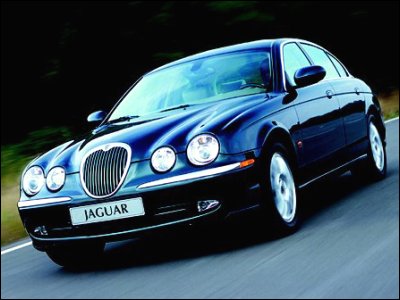
Throughout the 1970s Jaguar had been developing "Project XJ40" which was an all-new model intended to replace the original XJ6. Due to problems at British Leyland and the fuel crisis, the car was continually delayed. Proposals from Jaguar's in-house designers and Pininfarina were received. Eventually, it was decided an internal design would be carried through to production and in February 1981 the BL board approved ₤80 million to produce the new car, however by the launch over ₤200 million had been invested.In 1989, under Ford control, the model range was revised with the deletion of the 2.9 L engine, replaced at the low end by a twin-cam 3.2 L version. The 3.6 L was upgraded to 4.0 L. The most obvious interior improvement was replacement of the often unreliable digital dashboard with conventional analogue instruments. In 1994 the XJ6 received a passenger's side airbag which meant the loss of the in-dash glove box.With the design alteration of the XJ40 engine compartment finally completed, the XJ81 or XJ12 saloon reached the market in 1993 and continued until the end of the 1994 model year. The 1993 - 1994 XJ12 Vanden Plas cars marked the introduction of the 6.0L V12 and four speed automatic transmission in the four door saloon. The new four speed automatic transmission in these cars was based on the GM 4L80E and featured an overdrive fourth gear for extended cruising comfort. The 1993 XJ12 cars that entered the United States were titled as 1994 cars. L'année de sa production : 1993 et son lancement 1993-1994. The primary differentiation between these early 1994 cars and the later 1994 cars is the presence of a in-dash glove box in the early cars that was replaced by a passenger's side airbag in the later 1994 cars. The V12 cars also had a latice or BBS style wheel and body coloured grille vanes.With an all-new replacement still years away, in the early 1990s Jaguar recognised the boxy 1980s lines of the XJ40 needed to be facelifted and decided a "retro" path was the way forward. This path worked as Jaguar's biggest markets, the Americans, the Germans and the Japanese all associate Jaguars with sleek, voluptuous and taut feline curves. This revamp reintroduced many styling cues of the popular original XJ series. The X300, as it was known, was based on the XJ81 chassis, designed by chief Jaguar designer Geoff Lawson and was launched as the XJ6 for the 1995 model year.According to the UK Department for Transport's road accident statistics on a model-by-model basis (Table A, Page 10), which shows risk of injuries to car drivers involved in two-car accidents whenever an injury is reported, the X300/X308 series Jaguars were among the safest cars on UK roads (measured in terms of chance of death in an accident during the four year assessment period) – three times safer than the safest Volvo models and matched only by the Mercedes-Benz S-Class. This publication presents estimates of the risk of driver injury in popular models of car, if they are involved in a two car injury accident. It does not address issues of primary safety and gives no information on whether or not specific makes of car have different risks of being involved in an accident. The statistics are based on personal injury road accident data reported to the Department for Transport by police forces within Great Britain.In September 1994, the XJ12 got the same styling revisions as the X300 XJ6. The 6.0 L Jaguar V12 engine offered 318 bhp (237 kW; 322 PS) and was continued for the 1995 model year mechanically similar to the 1994 XJ81 car, with a notable switch from forged to chill cast crankshaft. From 1995 on, the engine used a distributorless Nippon Denso electronic management system. The top aluminum cover in the V valley was redesigned to house two packs of 3 coils each, with each coil having two high tension terminals for a total of 12. These coilpacks were driven by two Denso ignition modules, which are very similar to Ford EDIS-6 units.For the 1995 model year, a supercharged version of the AJ16 engine was offered in an XJ badged as the XJR, and given the X306 designation. It is also known as the "XJR6", which helps to differentiate it from the later V8-powered XJR. This was the first supercharged Jaguar in the company's history and only the second car Jaguar ever made that used forced induction (the other being the turbocharged Jaguar XJ220 sports car.)A single 2-door XJ convertible was built in 1996 to commemorate Daimler's centenary. The concept car, called the Daimler Corsica, was based on the Daimler Double-Six saloon and can seat four. The prototype, which lacked an engine, had all the luxury features of an XJ saloon, but a shorter wheelbase. It is painted in a now-discontinued colour called "Seafrost." The Daimler Corsica was named after the 1931 Daimler Double-Six Corsica. The concept was a one-off, and may have been intended for limited production beginning in 1997. The car has made a limited number of appearances at car shows and events since 1996. It has most recently appeared at the Belfast Sports Car Show in January 2004. The Daimler Corsica prototype is owned by the Jaguar Daimler Heritage Trust, who have decommissioned it to operate as a fully functional road-legal car. It is on display at their museum at Browns Lane in Coventry, England. The car was recently displayed at Harewood House as part of the Jaguar Enthusiasts' Club show.September 1997 saw the "Mark 2" XJ revised for a final time, and this time the car (known as X308) had changed more over the X300 than the X300 had done over the XJ40. The exterior styling which won the award of "L'Automobile piu Bella del Mondo" was mildly revised, the only real notable changes being new, shallower grille, bumpers incorporating oval front indicators & side reflectors with 1/4 chrome trims instead of the full width ones of the X300, as well as revised clear indicator rear light clusters and the fitting of modern clear lens projector headlamps. The CATS Computer Active Technology Suspension was also offered, which adapted the stiffness of the dampers to optimise ride comfort or handling. The passenger compartment was further strengthened by use of ultra high strength boron steel and the high speed crash survivability was further improved by incorporation of a unique "swans neck" design into the crumple zones.
Although major revisions (through the X300 and, particularly, the X308 updates) kept the Mark 2 competitive in some areas against its rivals, the basic design dated back to 1986 which meant the car was being outclassed and losing ground to its rivals, many of which were now two generations advanced from the original competitors of the Mark 2 XJ. For example, since the model had been unveiled in 1986 (at the same time as the BMW 7 Series E32), BMW had launched Mark 3 (E38) and Mark 4 (E65) versions of its 7 Series in 1994 and 2001 respectively – all while Jaguar was still producing the Mk 2 XJ.The X358 is a face-lifted version of the X350, and was unveiled at the end of February 2006. Aesthetically, the main changes were a new lower grille system, with a deeper, more aggressive gape, and side air vents added similar to those introduced on Ian Callum's 2005 XK. On the 9th July the newly styled XJ was unveiled at the Saatchi Gallery in London, with Jay Leno and Elle Macpherson unveiling the new car. The unveiling was broadcast live on the Jaguar website. In keeping with Ian Callum's new design direction for Jaguar, it is an all-new exterior design and a break from the XJ series mould carried over on all previous generations. It is a longer, wider car that looks much bigger than its predecessor.The front has clear links with the executive car XF, although with slimmer, sleeker lights and a larger, squarer grille and more aggressive appearance. The rear is the contentious part, like nothing Jaguar has shown before. The upright, swooping taillights, nicknamed 'cat's claws', and black roof panels each side of the rear screen, which aim to hide the XJ's width, are the most striking aspects. There is also a standard full-length sunroof, that extends all the way back with just a single body-coloured roof panel that the designer likens to bridges on yachts. The new XJ features innovative, all-LCD dashboard and console displays. The former can be configured to display various virtual dials in addition to the obligatory speedometer, whereas the latter presents different views to the driver and passenger, including control of a sophisticated video and audio system. Mike Cross, one of the company's Chief Engineers, spoke more about the new Jaguar XJ dynamics in an interview with Autocar. Like several of its predecessors the X351 will be available with both standard and long wheelbase as well as many special editions. Engines are modern units, already seen in other JLR products: the five litre petrol V8 either normally aspirated or supercharged, or a twin-turbo three litre diesel which is predicted to account for most of the sales.
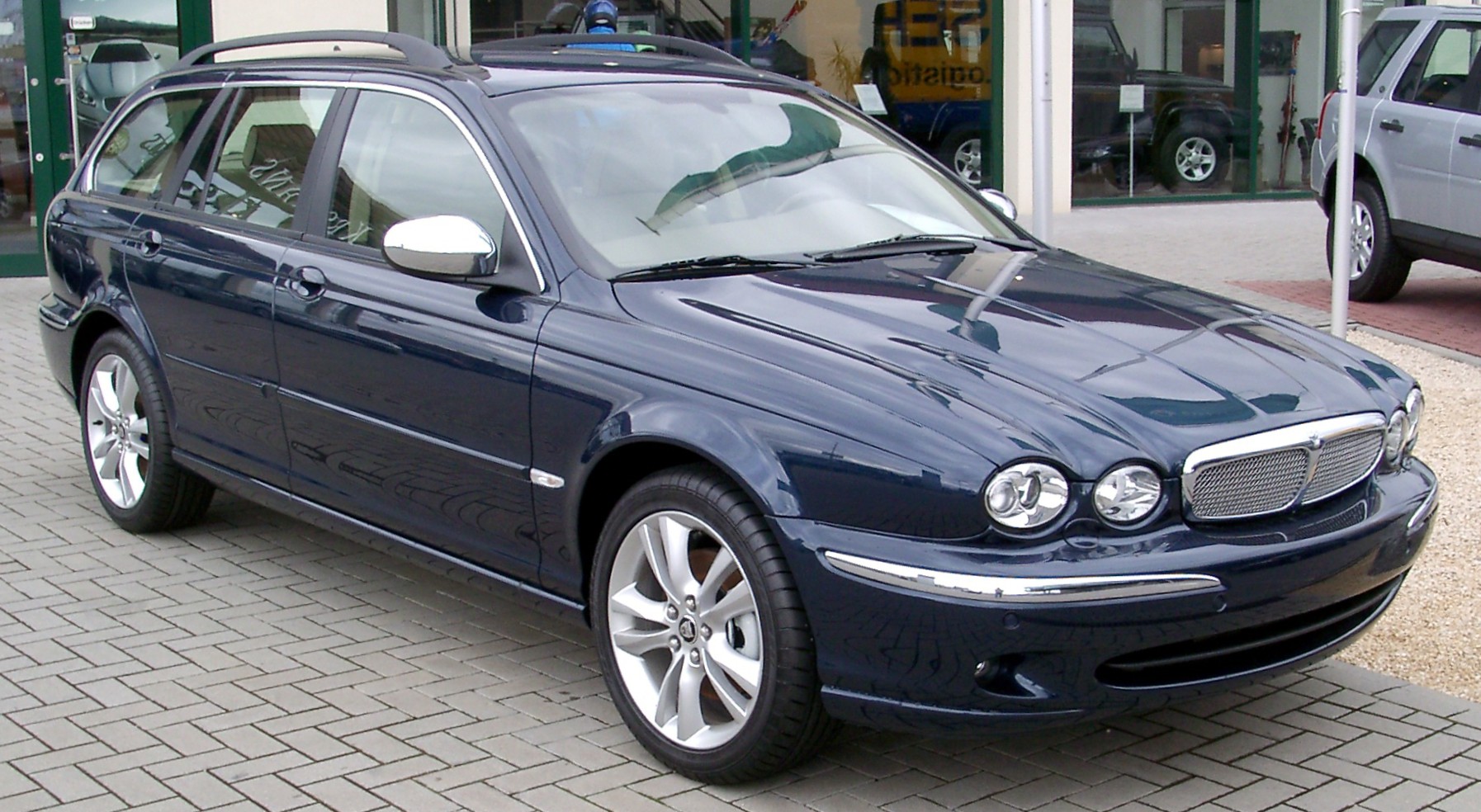
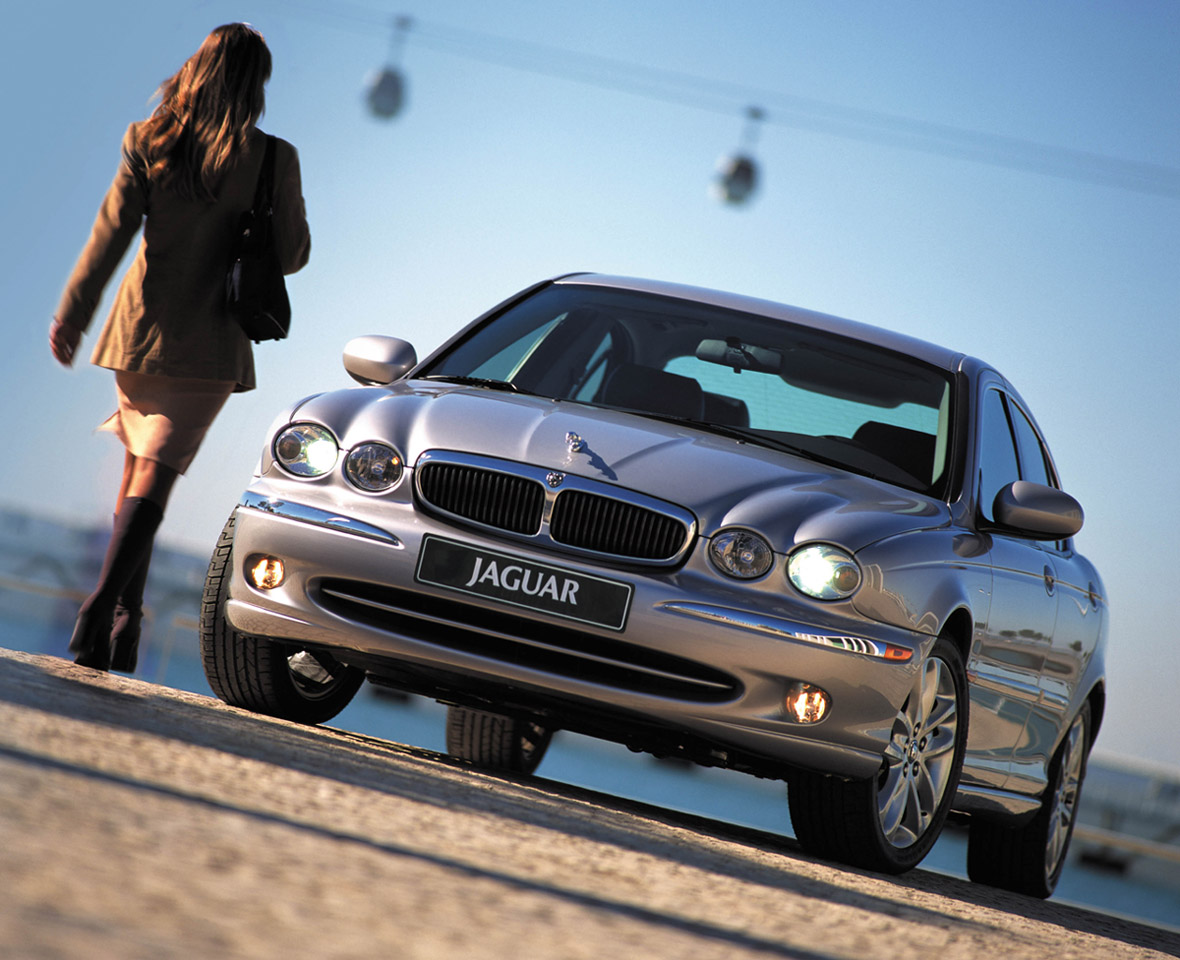
The X-Type is a compact executive car which was produced between 2001 and 2009 by Jaguar. As the smallest of the Jaguar model range, with saloon and wagon variants, the X-Type was the only estate ever manufactured in series production by the company. Models were manufactured at the Halewood assembly facility near Liverpool, a Jaguar Land Rover plant which also produces the Land Rover Freelander. Codenamed X400, the X-Type was Jaguar's first compact 4-door saloon. The X-Type was one of the last to be styled under the supervision of Geoff Lawson, with the principal designer credited as Wayne Burgess. The X-Type was based on a modified version of the Ford CD132 platform shared with the 2000 Ford Mondeo. To distinguish it from its rivals and its Ford origins, the X-Type was initially offered as all-wheel drive only and mated to a 2.5 litre and 3.0 litre AJ-V6 petrol engine. In 2003, the X-Type was offered in front-wheel drive with the introduction of Jaguar’s first four-cylinder diesel engines (based on the Ford Duratorq ZSD unit from the Mondeo and Transit), and with the smaller 2.0 litre petrol V6.
n 2004, a further body style was added with the introduction of an estate version, making it the second-ever Jaguar estate car. In North America, the estate was officially known as the "Sportwagon”. It was the first version of a Jaguar designed by Ian Callum.In 2004 the Spirit limited edition model based on the 2.5 V6 featured the 'Sports Collection' pack with new spoilers and rear valance. It was followed in 2005 by the XS limited edition, which continued the sports theme, but available with a wider range of engines. The X-Type received minor modifications to its grille design for the 2004 and 2006 model years, and a fuller facelift of the front end for the model year 2008, which included a redesigned front bumper and an overall look that echoed the 2008 Jaguar XF. New engine choices included a 2.2 litre diesel with particulate filter, in addition to 2.0 diesel, 2.5 V6 petrol and 3.0 V6 petrol engines. The 2008MY vehicle was unveiled at the 2007 Canary Wharf Motorexpo. The revised X-Type went on sale internationally during 2008, with UK sales from March. Significant changes included: * New six-speed automatic transmission and Jaguar Sequential Shift on 2.2D * New mesh grille featuring the Jaguar ‘growler’ badge, in the style of the new XJ. with new front and rear bumper design * New door mirrors with integrated turn indicator repeaters
Jaguar has announced plans to unveil a successor for the X-Type to be unveiled in 2012 and to compete with the BMW 3-Series, and to be positioned below the current XF. Interviewed in November 2000, managing director Jonathan Browning said Jaguar's objective was to achieve annual sales of 100,000 with the car, partly by taking market share from established German rivals and partly by expanding the market segment in Jaguar's key markets. The X-Type was Jaguar's best-selling model during almost all its production run,[10] but sales did not met projections, peaking at 50,000 in 2003. In the United States, the car's primary market, sales dropped from 21,542 in 2004 to 10,941 in 2005. In the same year, Audi sold 48,922 A4s, BMW sold 106,950 3-series and Mercedes-Benz sold 60,658 C-classes. Ford's decision to use a modified version of the Ford Mondeo platform (shared with the Land Rover Freelander compact crossover SUV which is also produced at Halewood) for the Jaguar X-Type wasn't received well by some enthusiasts of the marque. TIME magazine described the X-Type as the "British Cadillac Cimarron" in its "50 Worst Cars of All Time" list, suggesting its badge-engineered made it unpopular. Numerous car magazine and website reviews were largely positive for the X-Type, especially during the early years of its introduction. In reality, the X-Type used only 18% of Ford Mondeo's components, while a variety of Ford platforms, engines and components were being used by all models of the Ford Motor Company's luxury brands in that period, namely Aston Martin, Jaguar and Lincoln. In 2008, Jaguar director of design Ian Callum said that, despite management denials at the time, the slow-selling X-Type “was essentially designed in Detroit and presented as close to a fait accompli to reluctant designers and engineers at Jaguar's Whitley design centre." The facelifted model was expected to continue through to the 2010 model year in its remaining markets, and not to be directly replaced. On 15 July 2009, Jaguar Land Rover announced that it would cease the production of the X-Type at the end of 2009, with the loss of 300 jobs, and have a three-week shut down, at their plant in Halewood where the car was built, between September and December. By this time more than 350,000 had been produced. Jaguar X-Type won AutoWeek's Editors Choice Award as the Most Significant Car at the Geneva Motor Show of 2001.

 Jaguar C-X75 is a plug-in hybrid, two-seat, concept car from Jaguar which debuted at the 2010 Paris Motor Show. The C-X75 produces 778 horsepower through four electric motors, each of which drives one of the four wheels. The batteries driving these motors are recharged using two diesel-fed micro gas turbines instead of a conventional four-stroke engine. The C-X75 was named in honor of Jaguar’s 75th anniversary, the C stands for concept and the X for experimental. In terms of performance, Jaguar envisions future super cars reaching 330 km/h (205 mph) and accelerating from 0 to 100 km/h (0 to 62 mph) in 3.4 seconds and 80 to 145 km/h (50 to 90 mph) in 2.3 seconds. It is powered by four 145 kW (194 hp) electric motors – one for each wheel - which produce 780 hp (582 kW) and a total torque output of 1,600 N·m (1,180 ft·lbf). Inherent in the drivetrain is the ability to independently vector torque to each wheel across the full speed range. The micro gas turbines developed in a partnership with Bladon Jets generate enough electricity to extend the range of the car to 900 km (559 mi) while producing 28 grams of CO2 per kilometre on the EU test cycle. While running solely on battery power, the C-X75 has an all-electric range of 110 km (68 mi). Among other advantages, the micro turbines used in the C-X75 can be run on a range of fuels including diesel, biofuels, compressed natural gas and liquid petroleum gas. Jaguar also focused on the aerodynamics in order to improve performance. For example, the carbon-fibre rear diffuser, an element in guiding airflow under the car and creating downforce, includes an active aerofoil and is lowered automatically as speed increases. Moreover, the C-X75 features an extruded and bonded, aerospace-inspired, aluminium chassis, saving on weight and improving sustainability and performance.
 Jaguar C-X75 With Turbo Speed
 Jaguar C-X75 Interior Concept
 Jaguar C-X75 Speedometer
 Jaguar C-X75 Top View
 Jaguar C-X75 Exotic Interior
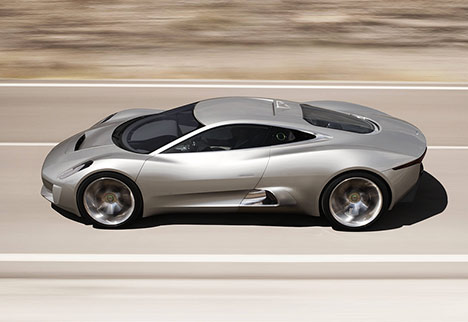 Jaguar C-X75 On The Road
 Elegant Jaguar C-X75